The Charteris Collection: first and rare editions of Mozart and Beethoven now in the Library collection
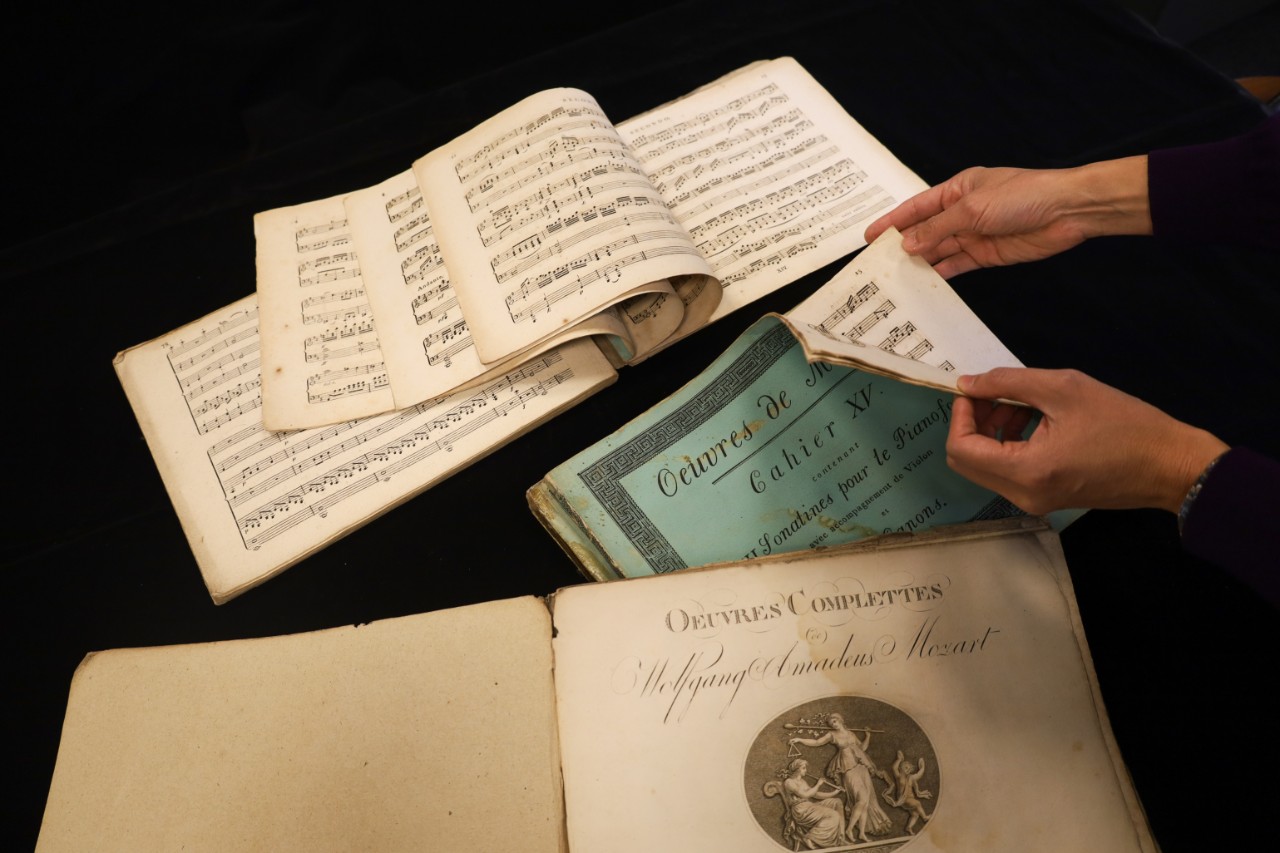
The Library is delighted to share the recent acquisition of more than 200 first and rare editions of works by Wolfgang Amadeus Mozart (1756–1791) and Ludwig van Beethoven (1770–1827), now housed in Rare Books and Special Collections.
The collection was curated and generously gifted to the Library by Richard Charteris (Emeritus Professor in Historical Musicology, Sydney Conservatorium of Music) as an incentive for the study and research of this music.
This is now the largest collection of Mozart and Beethoven’s works of this kind in the Southern Hemisphere.
"I assembled this collection for the express purpose of donating it to The Rare Books and Special Collections Library at The University of Sydney to encourage the study and research of Mozart’s and Beethoven’s music in Sydney and elsewhere in the antipodes.
Australia is far removed from the great Mozart and Beethoven collections in the northern hemisphere and until now only a handful of first editions of their music existed in the country. Recognising how students and researchers focusing on Mozart and Beethoven could benefit from first-hand experience of rare materials, the need for a collection of selected first and rare editions of their music was compelling.
The technologies of Mozart’s and Beethoven’s time differ markedly from those of today, and these rare artefacts offer invaluable insight into the printing practices of the time, while also shedding light on the tastes of early musicians and collectors.
Above all, they will facilitate critical analysis of the music and sources and their relationship to modern scores and deepen the understanding of how Mozart, Beethoven and others shared and treated their music."
– Richard Charteris
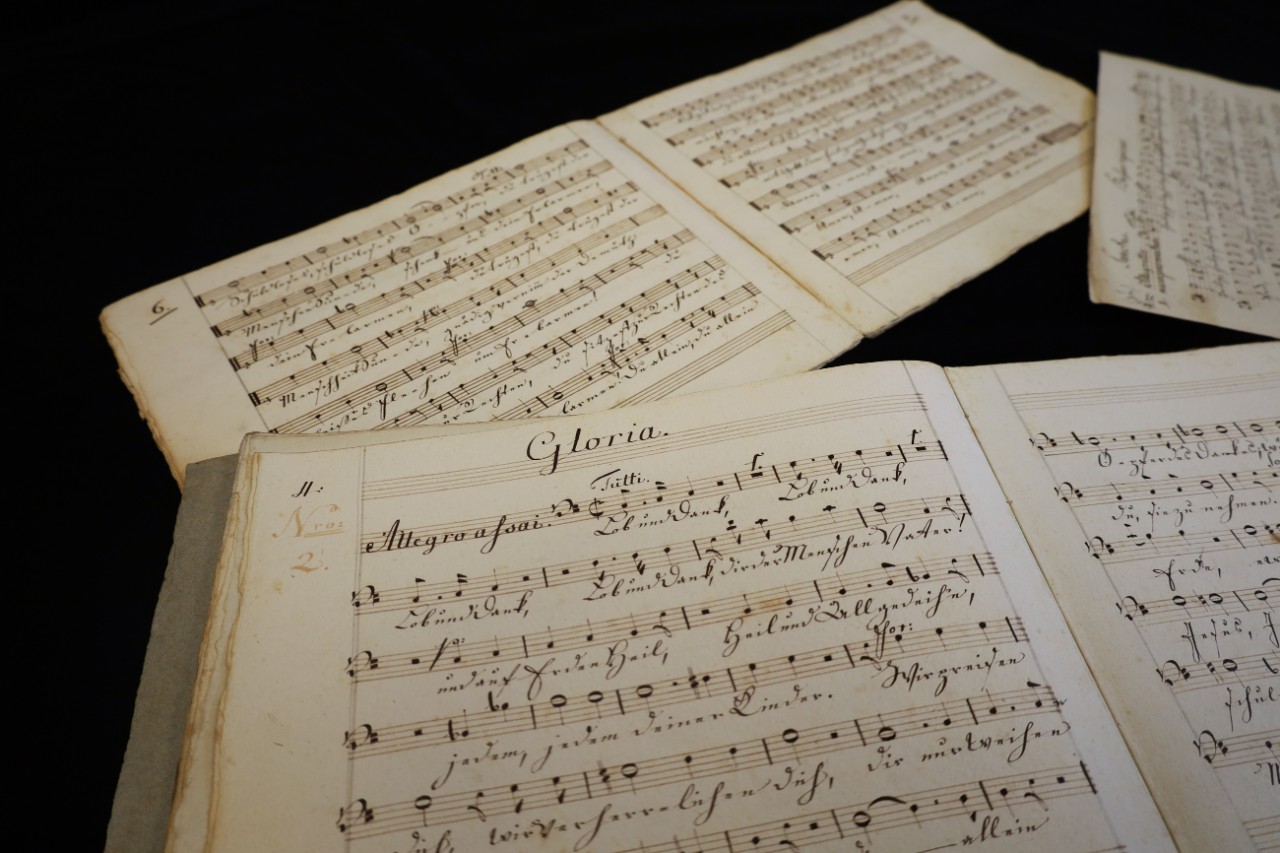
The significance of Mozart
The musical compositions by Wolfgang Amadeus Mozart (1756–1791) were pivotal for the development of Classical music.
Mozart remains a cornerstone of classical music, admired for his remarkable output –over 600 works composed before his death at age 35 – and his enduring ability to move and inspire listeners. His music is often viewed as deceptively simple. On the surface, it may sound graceful, clear, and easy to follow – qualities that reflect the Classical ideals of balance and elegance. However, this masks its profound complexity and technical demands which challenge the best of performers.
Its apparent simplicity makes his work accessible to general audiences while its complexities offer endless insight for musicians and scholars. Mozart’s mastery of form, harmony, and counterpoint influenced composers like Beethoven, Schubert, and Brahms, and continues to be a foundation of musical education. His timeless appeal lies in his ability to express profound human emotions within music that is both elegant and universal.
First editions and early prints of Mozart’s music hold significant historical and cultural value, reflecting not only their rarity and scholarly interest but also Mozart’s rising international reputation during his lifetime. The publication of his works in late 18th-century and early 19th-century France – particularly in Paris – illustrates the growing appeal of his music beyond German-speaking regions.
French publishers recognised the popularity of his symphonies, operas, and chamber music among both connoisseurs and the emerging bourgeois musical public. Many early editions included adaptations for amateur musicians, aiding the rapid dissemination of his fame. His presence in French musical print culture, including critical commentary, aligned his style with Enlightenment ideals of clarity, elegance, and emotional expression. Operas like Le nozze di Figaro and Don Giovanni found audiences in Parisian salons and theatres, while his instrumental music was praised for its refinement and depth, helping establish his legacy in European musical life.
The Charteris Collection: Mozart¹
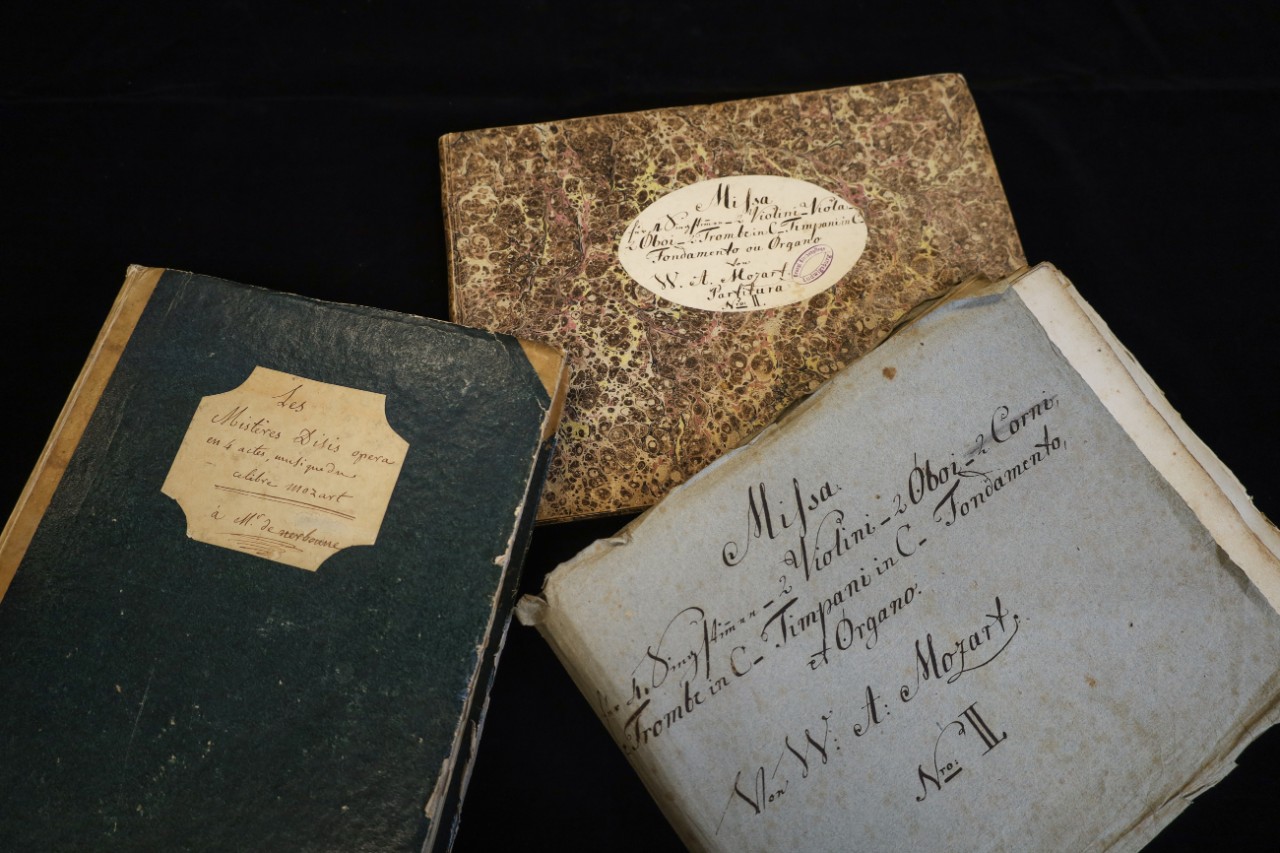
A significant portion of the collection is devoted to first and rare editions of works that Mozart composed during his final year, 1791. This includes Mozart’s influential opera Die Zauberflöte/The Magic Flute (Charteris 001-020, 176) and three other notable works from that year: his opera La Clemenza di Tito (Charteris 021-026, 137, 158) and his church compositions, the Ave verum corpus (Charteris 030-031) and Requiem (Charteris 027-029).
The collection also features two examples of the first full orchestral score ever to be published for a Mozart opera, specifically for Don Giovanni (Charteris 032-041, 149-154). They appear alongside other first and rare editions with music for this and other operas by Mozart, including Le Nozze di Figaro/The Marriage of Figaro (Charteris 042-045, 156-157, 165-166), Così fan tutte (Charteris 046-050, 175), Idomeneo (Charteris 138-141), Die Entführung aus dem Serail/The Abduction from the Seraglio (Charteris 142-145, 159-160) and Der Schauspieldirektor/The Impresario (Charteris 146-148).
Moreover, the collection includes a rare complete set of full orchestral scores of seven major operas by Mozart which were issued by the French publisher Jacques-Joseph Frey (1782–1838). Frey’s series of Mozart opera scores attracted more than 250 subscribers, and most are noteworthy for being the first French editions of the full orchestral scores. The original owner of one of these scores was the distinguished opera composer Daniel-François-Esprit Auber (1782–1871 – Charteris 049) and another one belonged to the acclaimed opera singer Pauline Viardot (1821–1910 – Charteris 038).
Another highlight of the collection is a rare first edition of all of Mozart’s compositions exclusively for piano as well as his chamber works involving piano. It comprises seventeen volumes and includes title-page illustrations by prominent artists of the period (Charteris 051-067).
Other Mozart works in the collection include:
- orchestral compositions, among them first editions of Mozart’s last four symphonies, nos. 38 (the ‘Prague’ - Charteris 097), 39 (Charteris 096), 40 (the ‘Great G minor’ - Charteris 100) and 41 (the ‘Jupiter’ - Charteris 101)
- piano concertos, encompassing first and rare editions of most of Mozart’s piano concertos, as well as four-hand piano arrangements of various Mozart overtures
- chamber works, such as the first edition of Mozart’s six sonatas for piano and violin known as the Auernhammer set (Charteris 054, 069) and a rare edition of some of his string quartets, including six that Mozart dedicated to the composer Joseph Haydn (Charteris 105-110)
- sacred choral works, such as the first editions of Mozart’s Te Deum (Charteris 114), Missa brevis in F major (Charteris 199), Credo Mass (Charteris 118), Coronation Mass (Charteris 117), Davide penitente (Charteris 116) and his arrangement of Handel’s Messiah (Charteris 119-120)
¹ Mozart’s works in the collection are identified using Koechel Verzeichnis numbers in the Library Catalogue.
Collection highlight
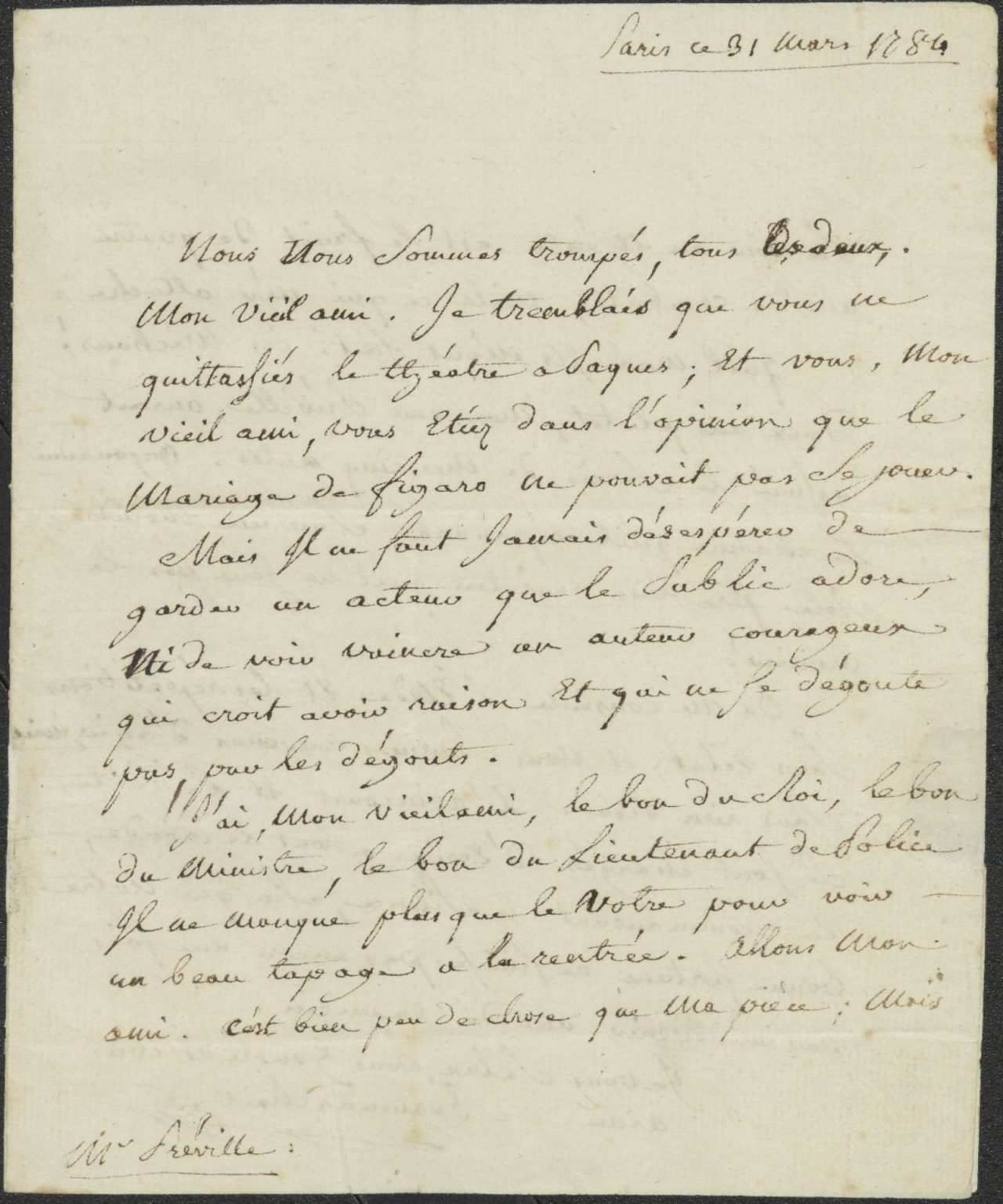
Letter from Pierre-Augustin Caron de Beaumarchais (1732–1799) to the actor Préville regarding the lifting of the four-year censorship ban on La folle journée, ou Le mariage de Figaro, Paris, 31 March 1784 Charteris 170
This letter has recently been digitised and can now be viewed on the Library’s Digital Collections website.
This letter is a rare and significant artifact that illuminates the cultural and political climate surrounding one of the most influential works of the late Enlightenment. Written by Beaumarchais, the celebrated playwright and intellectual, it announces the lifting of the royal censorship ban on his controversial comedy La folle journée, ou Le mariage de Figaro. Initially suppressed for its bold critique of aristocratic privilege and social inequality, the play’s eventual performance in 1784 marked a turning point in French theatre and public discourse on the eve of the Revolution.
The recipient of Beaumarchais’ autograph letter, Préville, was a leading actor of the Comédie-Française, underscoring the anticipation and importance of the play’s staging within the theatrical community. This correspondence captures a moment of triumph over censorship and reflects the networks that brought Enlightenment ideas to the stage.
Its relevance to a collection of early and rare Mozart scores lies in the profound influence of Beaumarchais’ play on Mozart’s opera Le nozze di Figaro (1786) which sets a condensed version of the play made by the librettist Lorenzo Da Ponte (1749–1838). Both the play and opera share themes of subversion and social critique, making this letter a vital contextual document for understanding the intellectual and artistic forces that shaped Mozart’s masterpiece. As such, it offers scholars and students a unique lens into the interplay between literature, politics, and music in 18th-century Europe.
Beaumarchais published and authorised editions of his play and examples appear at Charteris 155, 167-169 and 172.
The significance of Beethoven
The compositions of Ludwig van Beethoven (1770–1827) are widely regarded as emblematic of Western music at the turn of the 19th century, leading the transition from the Classical to the Romantic era.
Renowned for his emotional depth and expressive range, Beethoven’s works are often grouped into three creative phases: Early, Middle, and Late. His Early period, rooted in the traditions of Mozart and Haydn, reflects the formal clarity of the Classical style while developing his own distinctive voice. Notable examples include the Piano Sonatas Opus 13 ‘Pathétique’ and Opus 27 ‘Moonlight’.
The Middle period, following the dawn of the 19th century, is frequently described as Beethoven’s ‘heroic’ era. Here, he expanded both the scale and intensity of his music, conveying themes of struggle and triumph. Works such as the 'Eroica' Symphony, the Fifth Symphony, and the 'Emperor' Piano Concerto exemplify this bold, transformative style.
In his Late period, marked by increasing isolation, Beethoven’s music turns inward, embracing experimentation, dissonance, and departures from conventional form. These works reveal profound introspection and innovation, cementing his legacy as one of history’s most influential composers.
First editions and early prints of Beethoven’s works hold exceptional historical and cultural significance. They reflect not only the composer’s growing reputation during his lifetime but also the shift in musical taste toward greater individuality and emotional intensity. The publication of his music in early 19th-century Europe illustrated Beethoven’s role in shaping a new era of artistic expression, influencing generations of composers and securing his place as a central figure in the canon of Western music.
The Charteris Collection: Beethoven
The collection contains rare first editions of major compositions by Beethoven including his greatest religious work the Missa solemnis (Opus 123 – Charteris 195-196), scored for vocal soloists, large choir and full orchestra, and most of his symphonies, among them the Third (‘Eroica’) Symphony in E flat major (Opus 55 – Charteris 189), Fourth Symphony in B flat major (Opus 60 – Charteris 198), Fifth Symphony in C minor (Opus 67 – Charteris 178), Sixth (‘Pastorale’) Symphony in F major (Opus 68 – Charteris 182) and Ninth Symphony in D minor (Opus 125 – Charteris 179).
Another major work in the collection is Beethoven’s opera Fidelio (Opus 72), which explores the capacity of the human spirit to endure tyranny and oppression and the triumph of love, hope and universal brotherhood. The opera is represented here by three first editions, all originating from Beethoven’s third and final version of the opera (Charteris 134, 180-181). One of them is a very rare piano-vocal score of the opera which was printed specifically for Beethoven’s use.
Other Beethoven works in the collection include:
- orchestral compositions, such as the first edition of Beethoven’s Overture and incidental music for Egmont (Opus 84 – Charteris 183), a play by the great German poet and author Johann Wolfgang von Goethe (1749–1832), and the first edition of Beethoven’s Overture (Opus 124 – Charteris 184) which opened the Josephstadt Theatre in Vienna in 1822
- chamber works, including the first editions of Beethoven’s String Quintet in C major (Opus 29 – Charteris 193), Razumovsky Quartets (Opus 59/1–3 – Charteris 185), String Quartet in E flat major (Opus 74 – Charteris 186), known as the ‘Harp’ Quartet, and Sonata for Piano and Violin in G major (Opus 96 – Charteris 197)
- the first edition of Beethoven’s ‘Emperor’ Piano Concerto No. 5 in E flat major (Opus 73 – Charteris 190), which is probably best known for its shimmeringly beautiful Adagio slow movement, and the first editions of his String Quartet in B flat major (Opus 130 – Charteris 191) and String Quartet in C sharp minor (Opus 131 – Charteris 192).
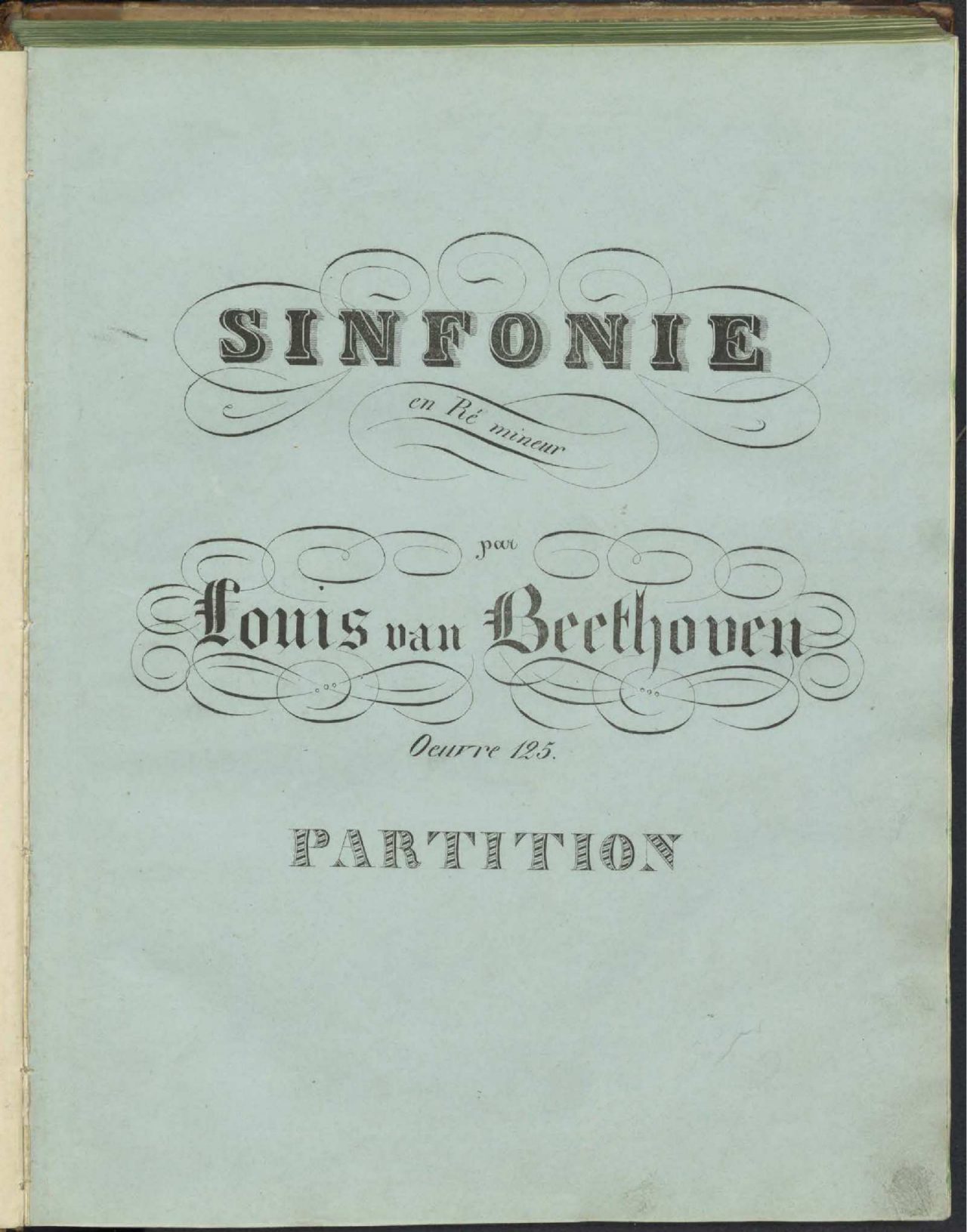
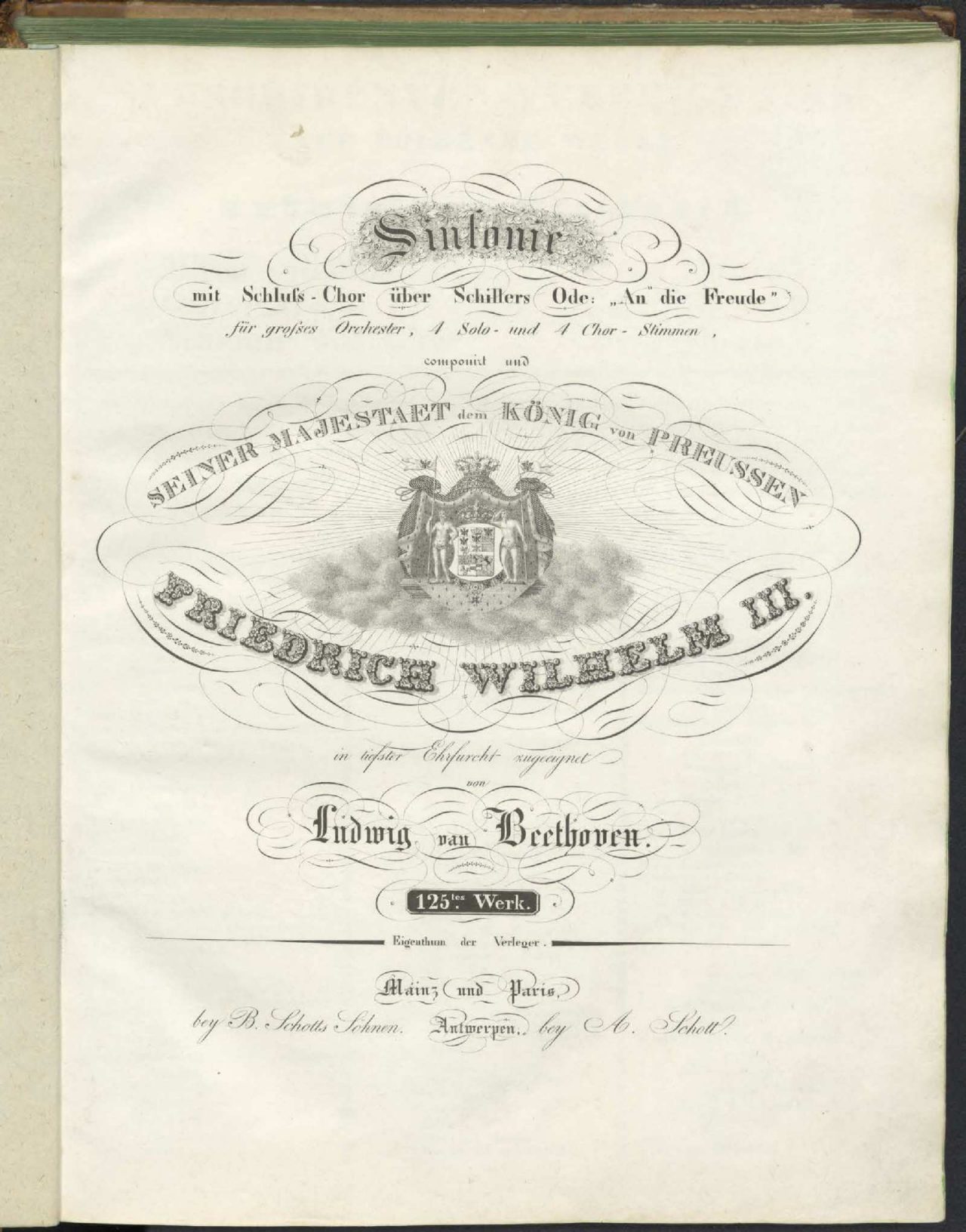
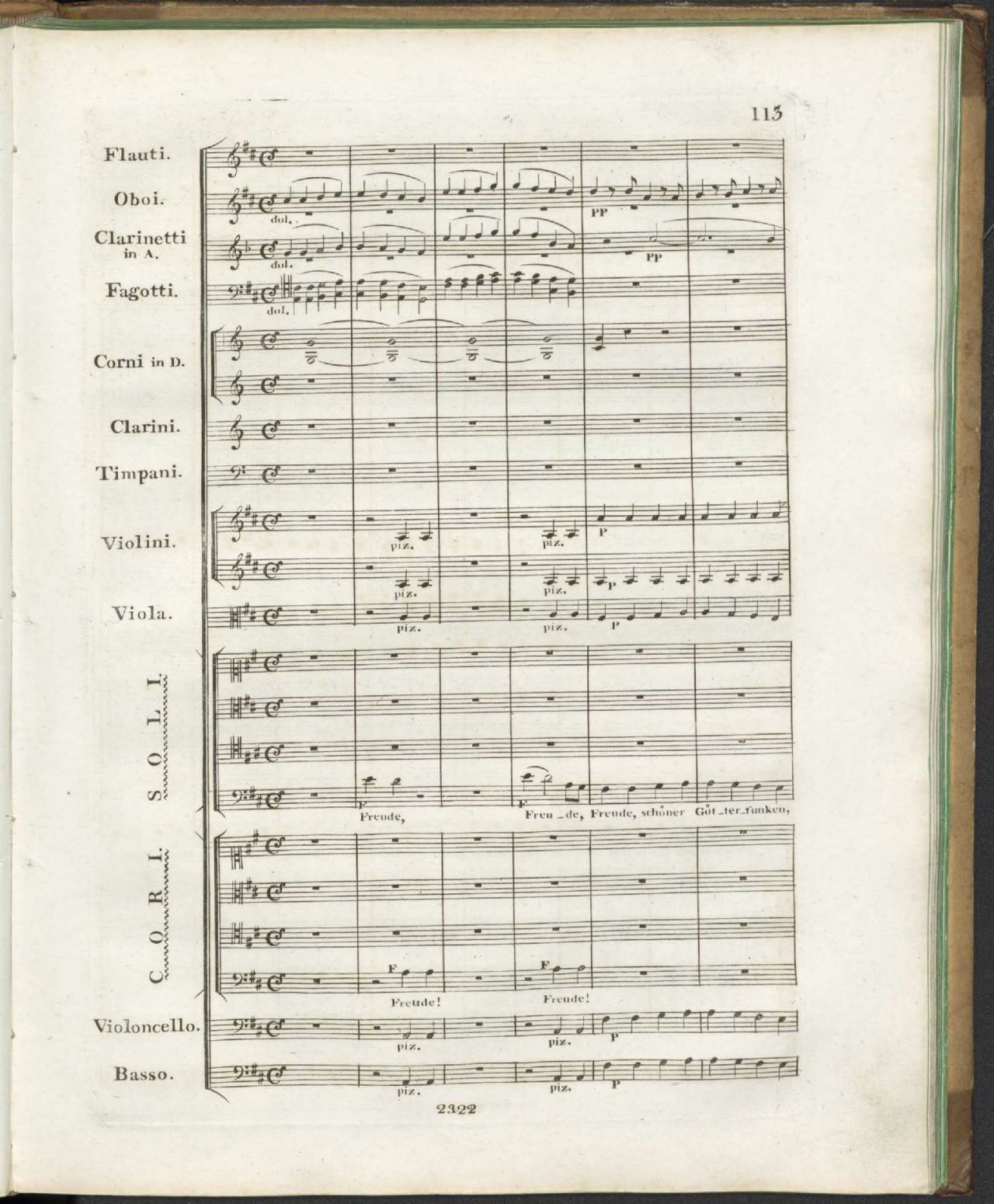
- Charteris 179
- Charteris 179
- Charteris 179
Collection highlight
First edition of Beethoven’s Ninth Symphony Charteris 179
This work has been recently digitised in its entirety and can now be viewed on the Library’s Digital Collections website (view the ‘Ode to Joy’ from page 113).
One of the most significant works in the collection is the first edition of Beethoven’s Ninth Symphony in D minor (Opus 125) published in Mainz in 1826. The work culminates in his glorious setting of Schiller’s poem ‘Ode to Joy’ scored for large orchestra, vocal soloists and full choir. As the first major symphony to include a choral finale, it served as the model for large-scale choral symphonies written by other composers during the 19th and 20th centuries and is widely regarded as one of the great landmarks in the history of western civilization.
In 2001, UNECSO added Beethoven’s autograph manuscript of the Ninth Symphony preserved in Berlin to its Memory of the World International Register, thus making it the first musical work to be honoured in this way.
Research and teaching
The Charteris Collection is available to research and to enrich learning experiences. Please get in touch with the Cultural Collections team (email cultural.collections@usyd.libanswers.com) to discuss collaborations such as:
- Organising class visits, object-based learning or class projects
- Research projects
- Public programs such as talks
Discover Rare Books & Special Collections
The University of Sydney Library holds one of Australia’s largest rare books and special collections (RBSC), with over 300,000 items.
Collection highlights also include Medieval manuscripts and early printed books; rare editions from influential authors; Science Fiction books and comics; East Asian Collections; and pre-2013 University of Sydney higher degree theses.
We welcome academics, students and the public to view and study our collections. Find out more about accessing the collections and our free RBSC community membership.
To discover more Rare Books and Special Collections online, visit:
- Browse highlights from the collection
- Digital Collections to discover thousands of digitised books, manuscripts, illustrations, journals, photographs and documents
- Google Arts & Culture to explore collection highlights and online exhibitions
Contact
For enquiries about Rare Books and Special Collecitons – including about the Charteris Collection – please get in touch with the Cultural Collections team via email cultural.collections@usyd.libanswers.com.