All In: highlighting First Nations voices and histories from the Library's collection

With National Reconciliation Week (NRW) (27 May – 3 June 2026) and NAIDOC Week (5 – 12 July 2026) approaching, it's an opportune time to explore the First Nations voices and histories held in our collection.
- This year’s NRW theme is All In, a call for all Australians to commit wholeheartedly to reconciliation every single day. All In makes clear that reconciliation is not a spectator sport and that all of us must step away from the sidelines and take action to make change. Source: reconciliation.org.au
- This year’s NAIDOC theme is 50 Years of Deadly. For five decades, NAIDOC Week has celebrated the voices of Aboriginal and Torres Strait Islander communities — steady, unapologetic, and proud. Fifty Years of Deadly is a tribute to the people who built this movement: the Elders who stood firm, the organisers who made space, the artists who turned resistance into expression, and the communities who keep showing up, year after year. Source: naidoc.org.au
As highlighted in the Library’s Aboriginal and Torres Strait Islander Cultural Protocols, which were launched in 2021, the Library is a space for truth-telling regarding the history of ongoing colonisation, and an entry point for many non-Indigenous people to engage with Aboriginal and Torres Strait Islander culture and history.
Visit the Library's new First Nations exhibition '50 Years Strong – All in for the Future Strength in Storytelling' in the Fisher foyer. You can also explore the Library's Aboriginal and Torres Strait Islander collections, a rich range of resources for engaging with First Nations cultures and histories.
For more details on our Aboriginal and Torres Strait Islander student spaces and support, please visit our First Nations Hub.
Cultural care notice
The Library’s collections contain representations and discussions of Aboriginal and Torres Strait Islander peoples, cultures and stories through both an Indigenous and non-Indigenous lens. Audiences are advised that there are references to the names and images of people who have died.
University Library's NAIDOC morning tea
Celebrating 50 Years of Deadly
Join us in the Aboriginal and Torres Strait Islander space on Fisher, Lvl 3 for a cuppa and check out the Library's 2026 exhibition for National Reconciliation Week and NAIDOC: 50 Years Strong — All in for the Future Strength in Storytelling, curated by Pippa Herden (Gomeroi) and Tanisha Naylor-Moran (Anaiwan), First Nations staff in Cultural Collections.
- When: Monday 6 July 2026
- Time: 10:00 am - 12pm
- Location: Fisher Library, Level 3, The Aboriginal and Torres Strait Islander space
This is an in person event and registrations are essential.
Click here to register
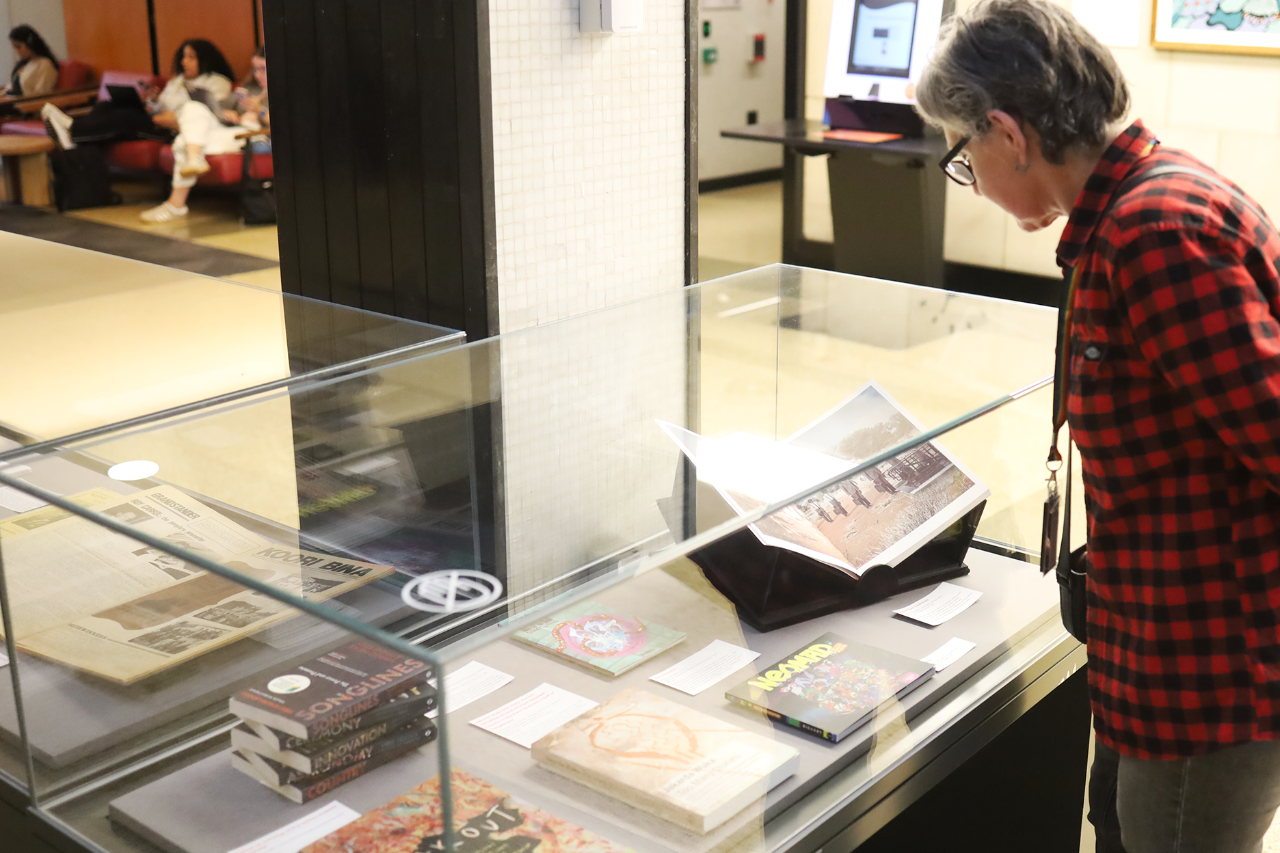
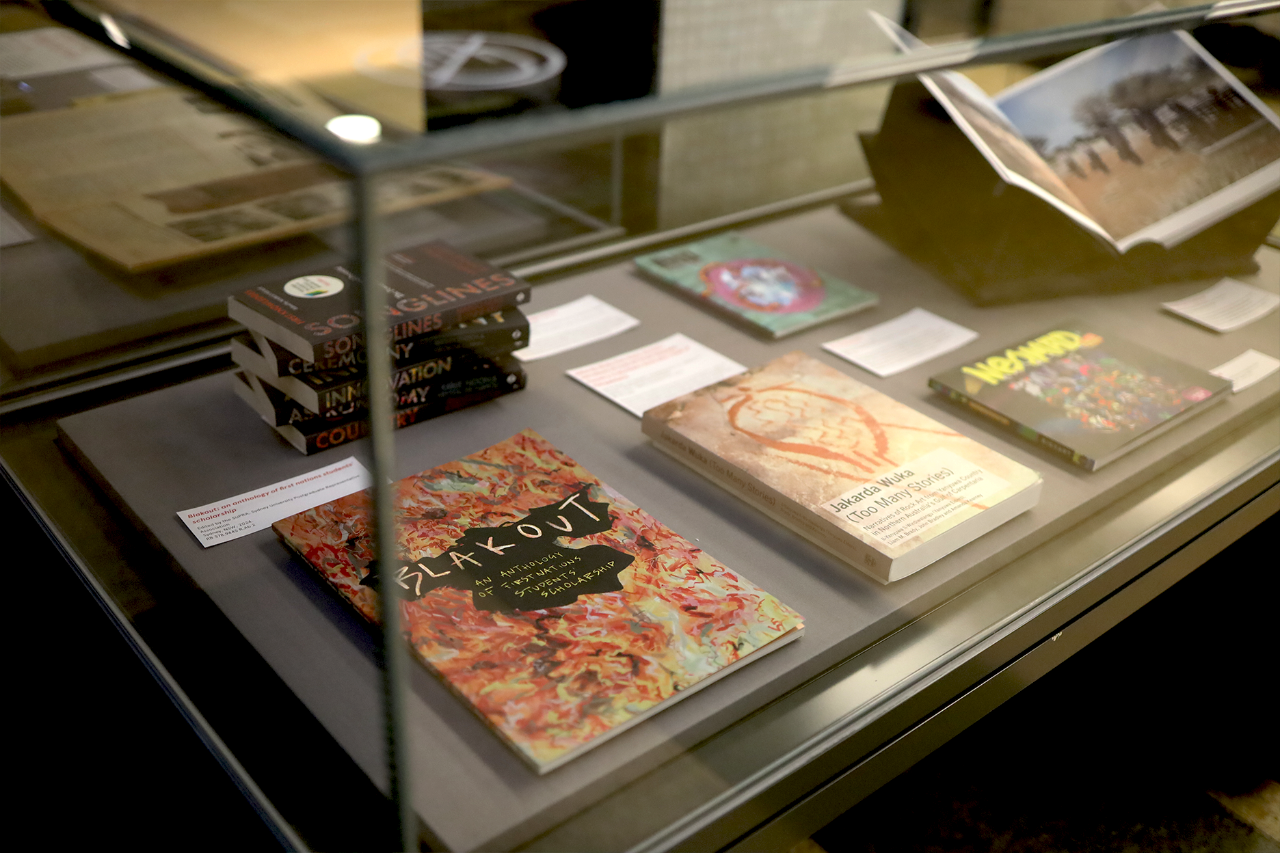
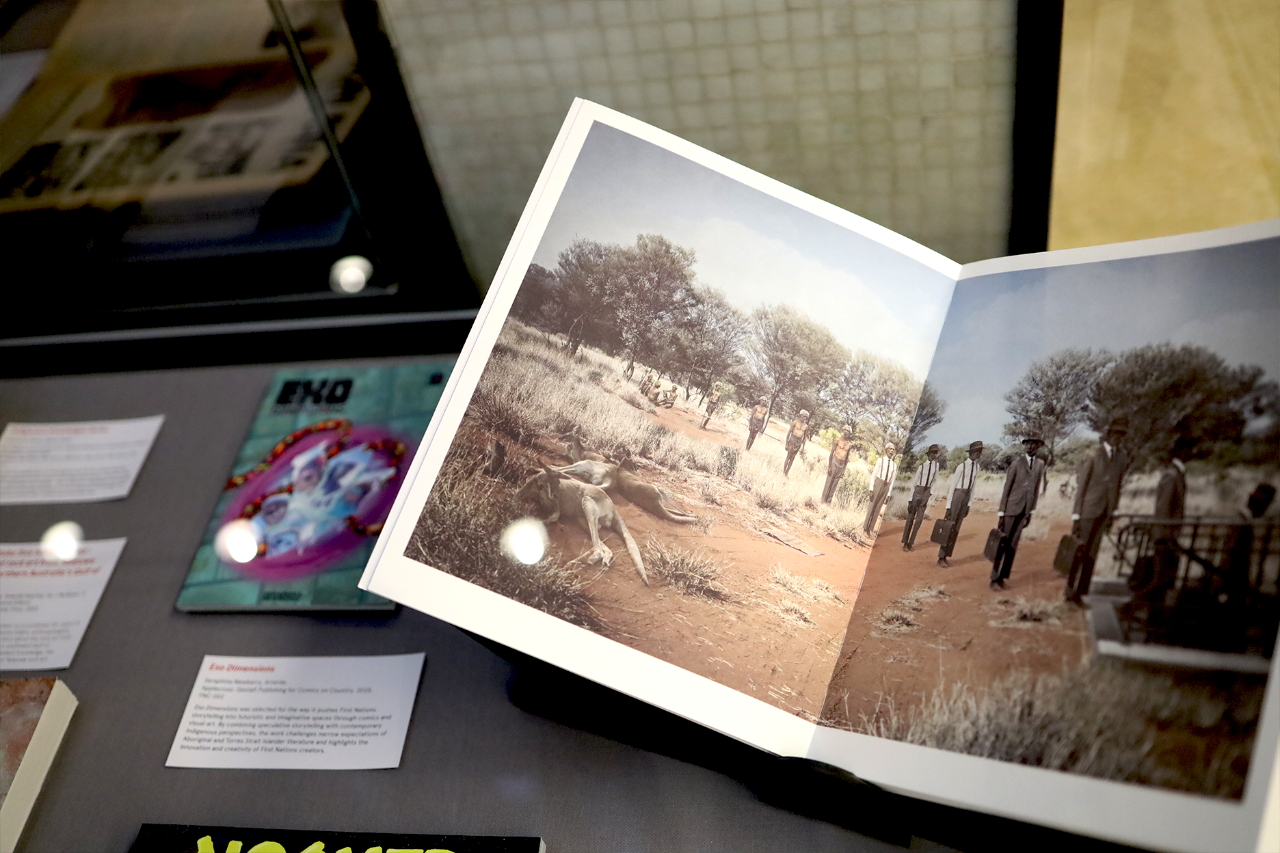
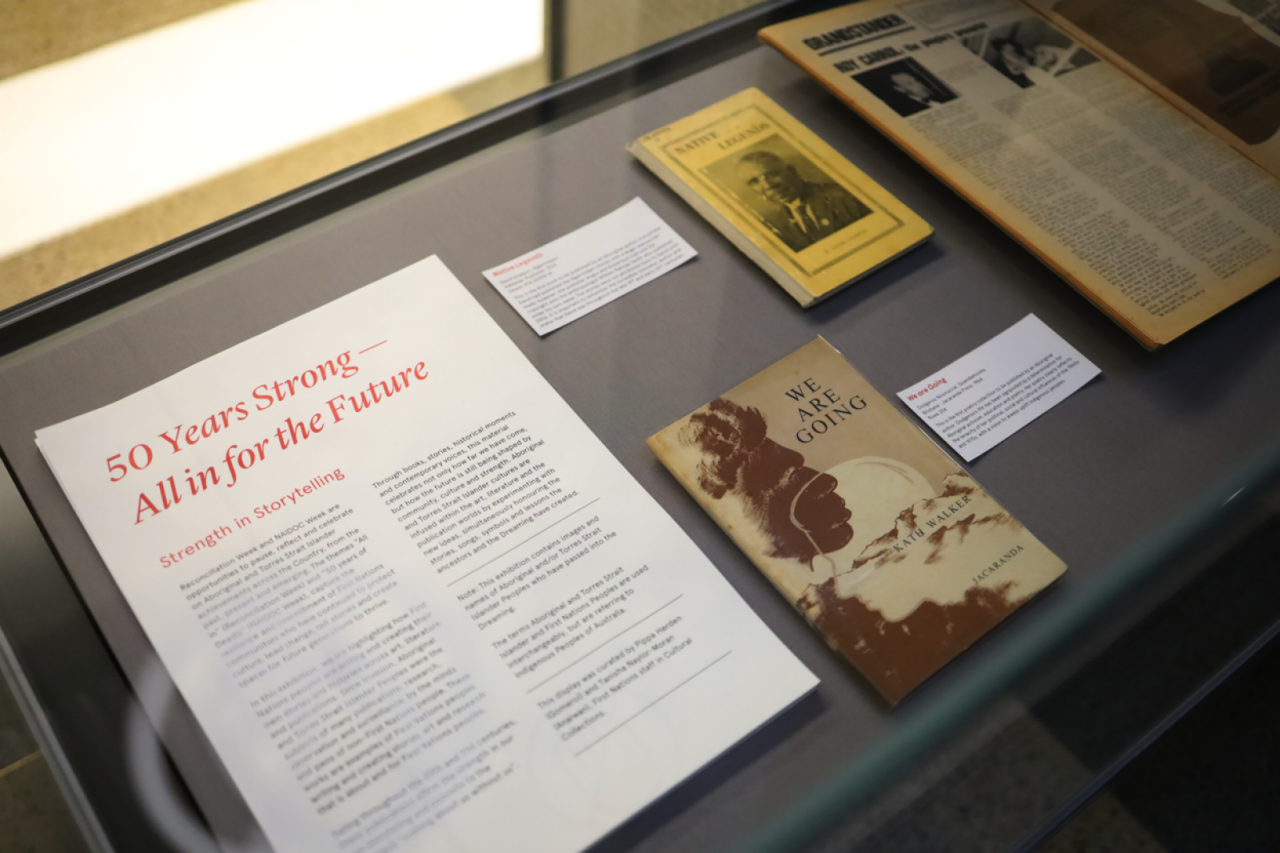
50 Years Strong — All in for the Future
Strength in Storytelling
This exhibition highlights how Aboriginal and Torres Strait Islander peoples continue to shape and reclaim storytelling across literature, art and publishing. Dating throughout the 20th and 21st centuries, these publications affirm the strength in our own storytelling and commits to the statement “nothing about us without us”. Through books, stories, historical moments and contemporary voices, this material celebrates not only how far we have come, but how the future is still being shaped by community, culture and resilience.
Aboriginal and Torres Strait Islander cultures are infused within the art, literature and the publication worlds by experimenting with new ideas, simultaneously honouring the stories, songs, symbols and lessons the ancestors and the Dreaming have created. Responding to this year’s Reconciliation Week and NAIDOC themes, “All In,” and “50 Years of Deadly”, we invite reflection on cultural continuity, self-representation, and the ongoing role of First Nations voices within creative and intellectual spaces. Keep an eye out as there are some great events happening in the Library throughout both Reconciliation Week and NAIDOC Week.
This display has been curated by Pippa Herden (Gomeroi) and Tanisha Naylor-Moran (Anaiwan), First Nations staff in Cultural Collections.
Sydney University Press
Sydney University Press (SUP) is a not-for-profit, scholarly publisher of research-based books, run from within the Library. Since 2005, SUP has published over 300 new research titles, including a series on Indigenous Music Language and Performing Arts.
Copies of all SUP titles are available to borrow from the Library.
Publications include:
- Vitality and Change in Warlpiri Songs edited by Georgia Curran, Linda Barwick, Valerie Napaljarri Martin, Simon Japangardi Fisher and Nicolas Peterson
- Yuupurnju: A Warlpiri song cycle sung by Henry Cooke Anderson Jakamarra with Jerry Patrick Jangala, Steven Dixon Japanangka, Wanta Steven Patrick Pawu-Kurlpurlurnu Jampijinpa, Carmel O’Shannessy and Myfany Turpin
- The Old Songs are Always New by Genevieve Campbell with Tiwi Elders and knowledge holders
Featured Collection: Aboriginal and Torres Strait Islander resources
Browse highlights from the Library’s collection that are either about Aboriginal and Torres Strait Islander peoples or cover Aboriginal and Torres Strait Islander topics. There are a variety of resources including novels, children’s books, books, sheet music and recordings. Please note that these collections are located across our various Library locations and Wingara Mura Resource Centre, and some can be accessed online.
Browse the featured collection
Wingara Mura Resource Centre
The Wingara Mura Resource Centre, located in the Gadigal Centre, holds a comprehensive collection of resources relating to Aboriginal and Torres Strait Islander culture and affairs, including rare and out of print materials. These resources are searchable in the Library catalogue.
The Resource Centre also offers:
- access to local and Indigenous newspapers
- printing and photocopying
- a quiet study area
- an onsite librarian to help you find the items you need
AIATSIS thesauri
Over the last two years, the Library has implemented the Australian Institute of Aboriginal and Torres Strait Islander Studies (AIATSIS) thesauri into many of our collections.
This thesauri is a collection of subject headings for language groups and people, place names, and topical subjects relating to Aboriginal and Torres Strait Islander peoples, whether that be cultural practices, the environment or the impact of colonisation. It provides a way for the Library to appropriately reflect the cultural, historical, social and political knowledges within our catalogue. In turn, this increases discoverability of and access to First Nations content for library users (both at our University and across the world).
This process will also extend to the material in Rare Books and Special Collections to enrich the catalogue records.