Anatomy of the head
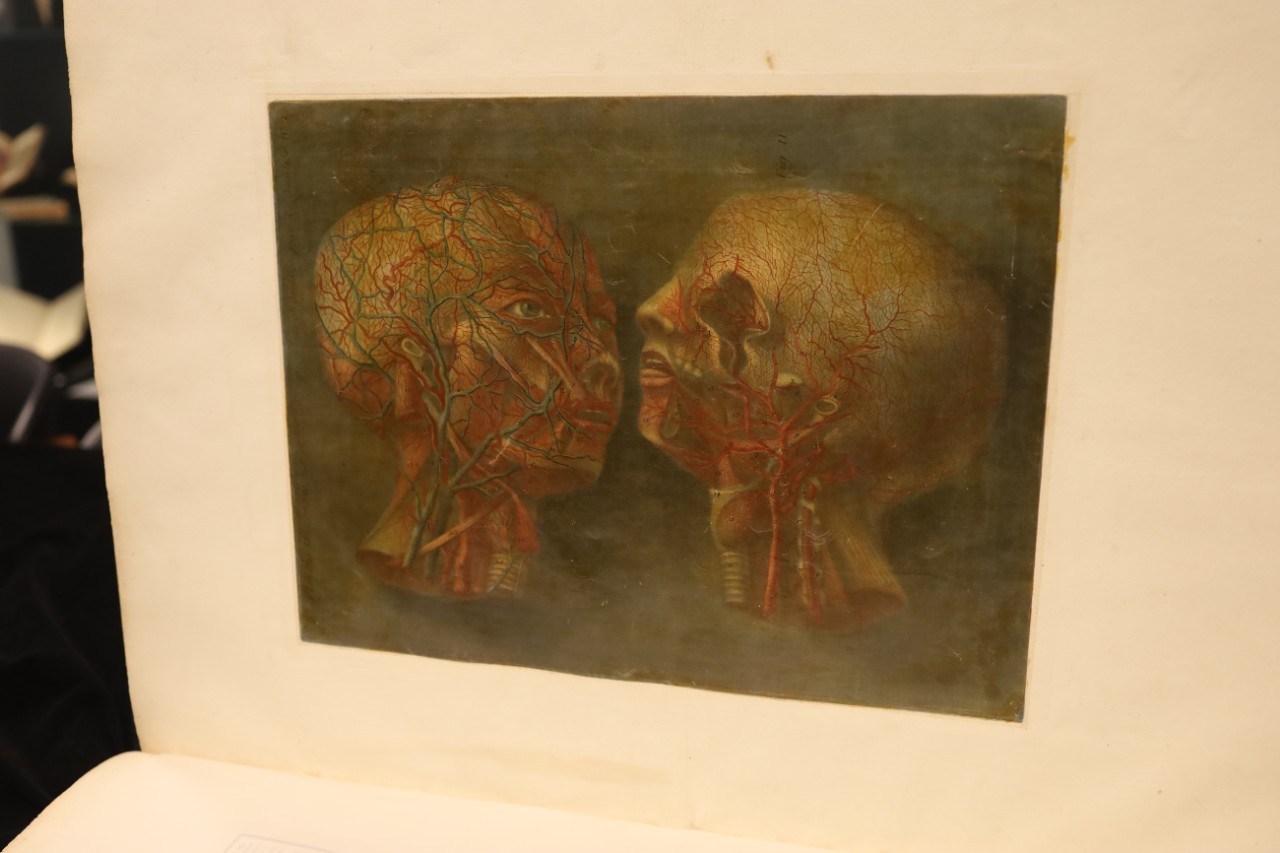
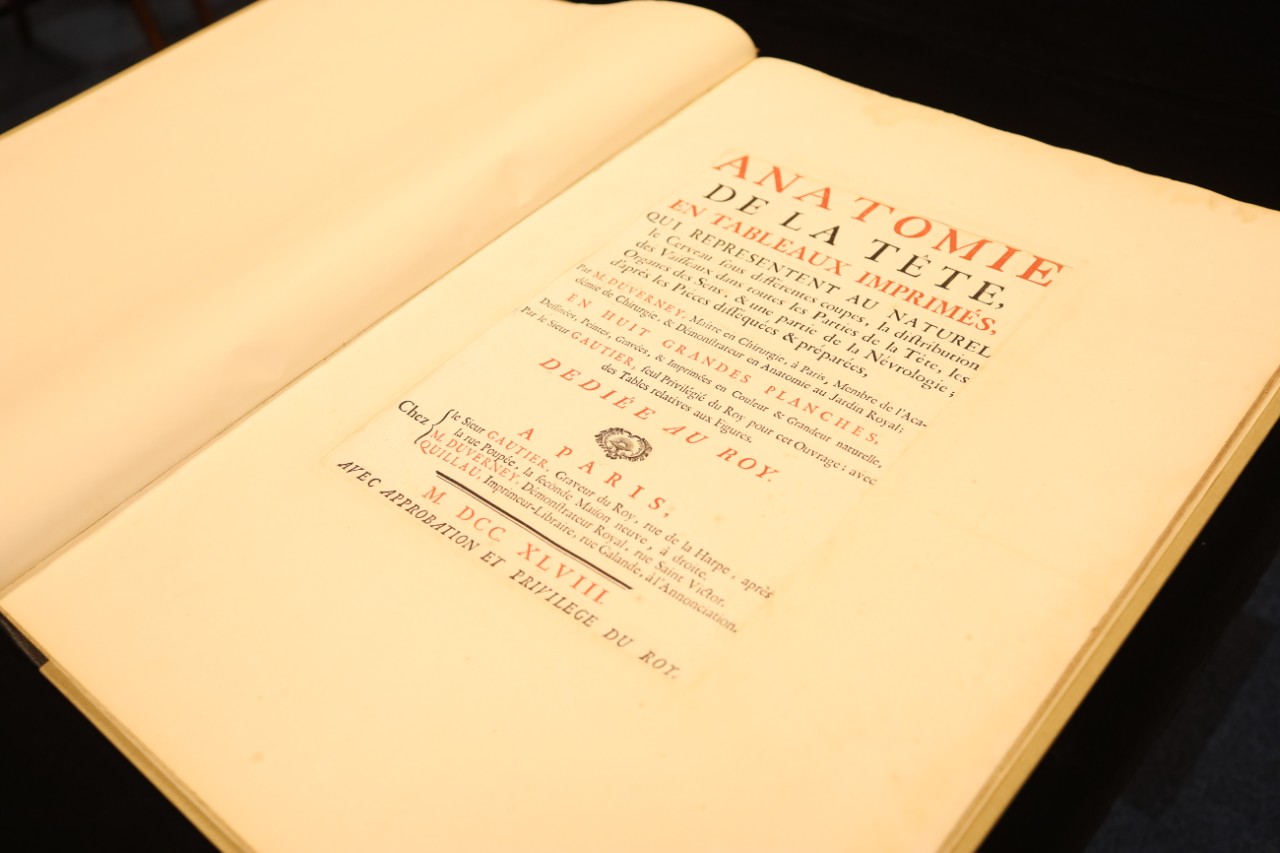
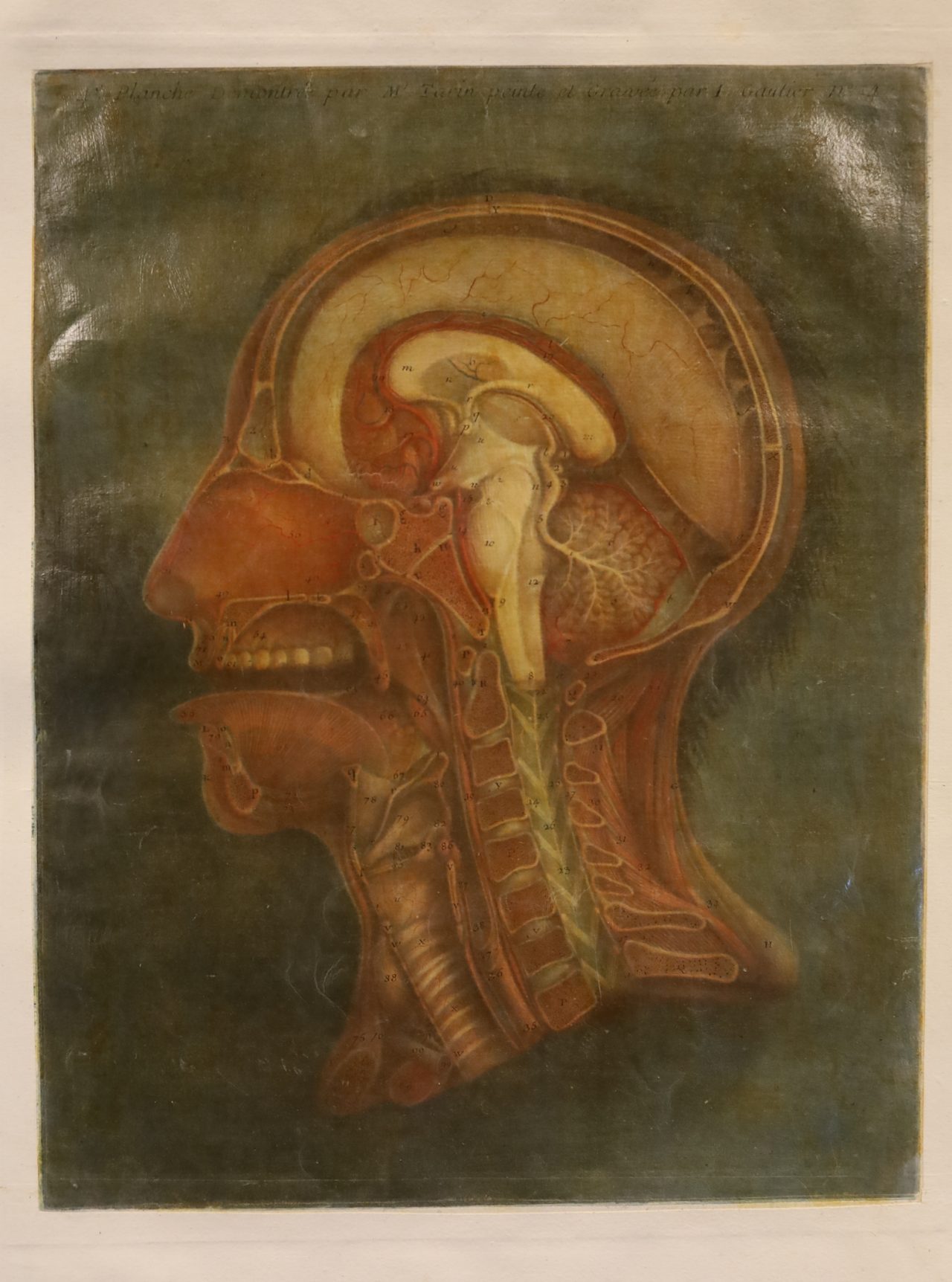
Anatomie de la tête (RB 3648.3) by Jacques Fabien Gautier d’Agoty, published in Paris in 1748, is a monument of Enlightenment science and printmaking. This landmark medical atlas is highly celebrated in both medical history and the history of art for its striking, life-sized, four-colour mezzotint plates. The illustrations depict the human brain, sense organs, and cranial blood vessels with a dramatic, surreal beauty.
What makes this first edition uniquely significant is how Gautier d’Agoty transformed the medium to achieve this lifelike presence. He was a pupil of Jacob Christoph Le Blon, who invented a three-colour printing process. Following Le Blon’s death, Gautier d’Agoty aggressively claimed the title of "inventor of colour printing", securing a royal privilege and an exclusive monopoly from King Louis XV. Though Le Blon's heirs challenged him legally, forcing the king to briefly withdraw the privilege in 1742, Gautier d'Agoty eventually bought them out to secure absolute royal backing.
His masterstroke was adding a fourth, black plate to Le Blon's red, yellow, and blue sequence. By layering these primary colours, heightening the prints with varnish, and setting his subjects against lush, dark green backgrounds, he gave veins, nerves, and flayed flesh an unprecedented, three-dimensional depth.
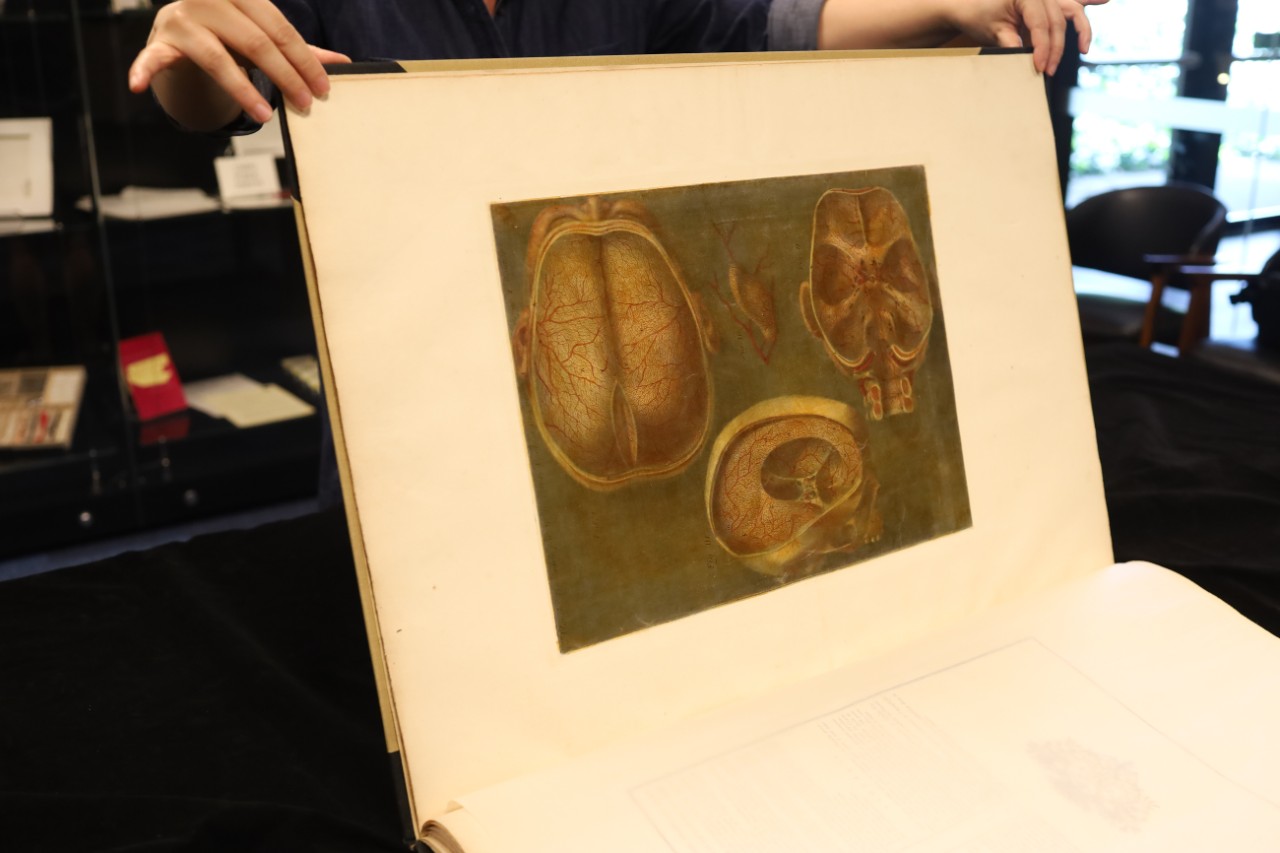
This dramatic style deliberately blurred the lines between clinical science and high art. Rather than presenting the dead as sterile data, Gautier d’Agoty portrayed his dissected subjects with an eerie, quiet dignity. They often appeared to be alive, looking out at the viewer or demurely turning away despite their exposed musculature. The 18th century visual perception of his work as a striking combination of the erotic, the beautiful, and the gruesome directly anticipated 20th century avant-garde movements. Modern Surrealist artists, including Salvador Dalí, later championed his work. They found profound inspiration in what André Breton, the founder of Surrealism, famously termed "convulsive beauty", a philosophy where the human body is treated as a site of dark, psychological wonder.
The Anatomie de la tête was structurally based on detailed anatomical dissections performed by the respected French physician Guichard Joseph Duverney. When the partnership dissolved mid-project, the young anatomist Pierre Tarin stepped in to complete the intricate cranial dissections. This book belongs to a grander arc of monumental works published by Gautier d’Agoty. It directly followed his 1746 masterpiece, Myologie complette, which features his most iconic and haunting print: L'Ange Anatomique (The Anatomical Angel), depicting a woman whose dorsal muscles are peeled outward like giant wings.
Ultimately prioritising dramatic, shocking, and macabre visual aesthetics over strict clinical utility, this medical atlas remains an extraordinary testament to the intersection of art, anatomy, and commercial ambition in 18th century France.
Call number: RB 3648.3
Access this item
Rare Books and Special Collections (RBSC) can be accessed by staff, students and academics (using existing University credentials), as well as the general public (by registering for a free RBSC community membership).
This item can be located in the Library catalogue. Make a request to view an item, under "more options" (at least 2 business days in advance). Then visit the Rare Books and Special Collections Reading Room during opening hours to view.
Teach with this item
The Library's extensive Rare Books and Special Collections are available to support research and education, through activities including:
- Academic-led classes
- Library-led classes / Object Based Learning (OBL)
- Using digitised content
Related information
Contact
Please email enquiries to cultural.collections@usyd.libanswers.com