The Dalley-Scarlett Music Collection
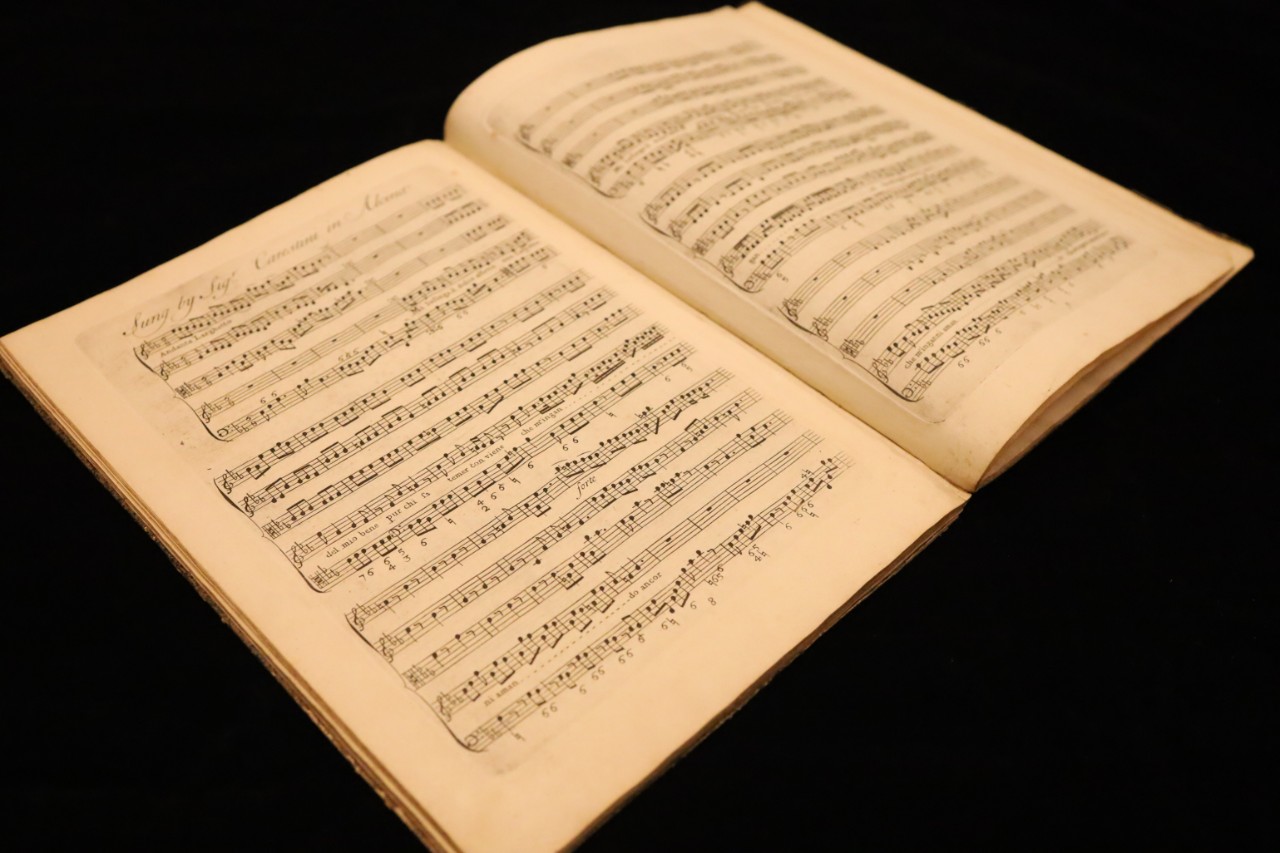
The Dalley-Scarlett Music Collection at the University of Sydney (Fisher Library) is one of the most important private music libraries to have entered an Australian public institution. Donated in 1959 after the death of Robert Dalley-Scarlett (1887–1959), the collection comprises approximately over 5,000 manuscripts and rare eighteenth-century editions of music. It reflects not only the breadth of European music tradition from the seventeenth to the early twentieth centuries, but also the intellectual and practical interests of a working musician, conductor, educator, and broadcaster who was deeply engaged in shaping Australian musical culture.
Early and first editions
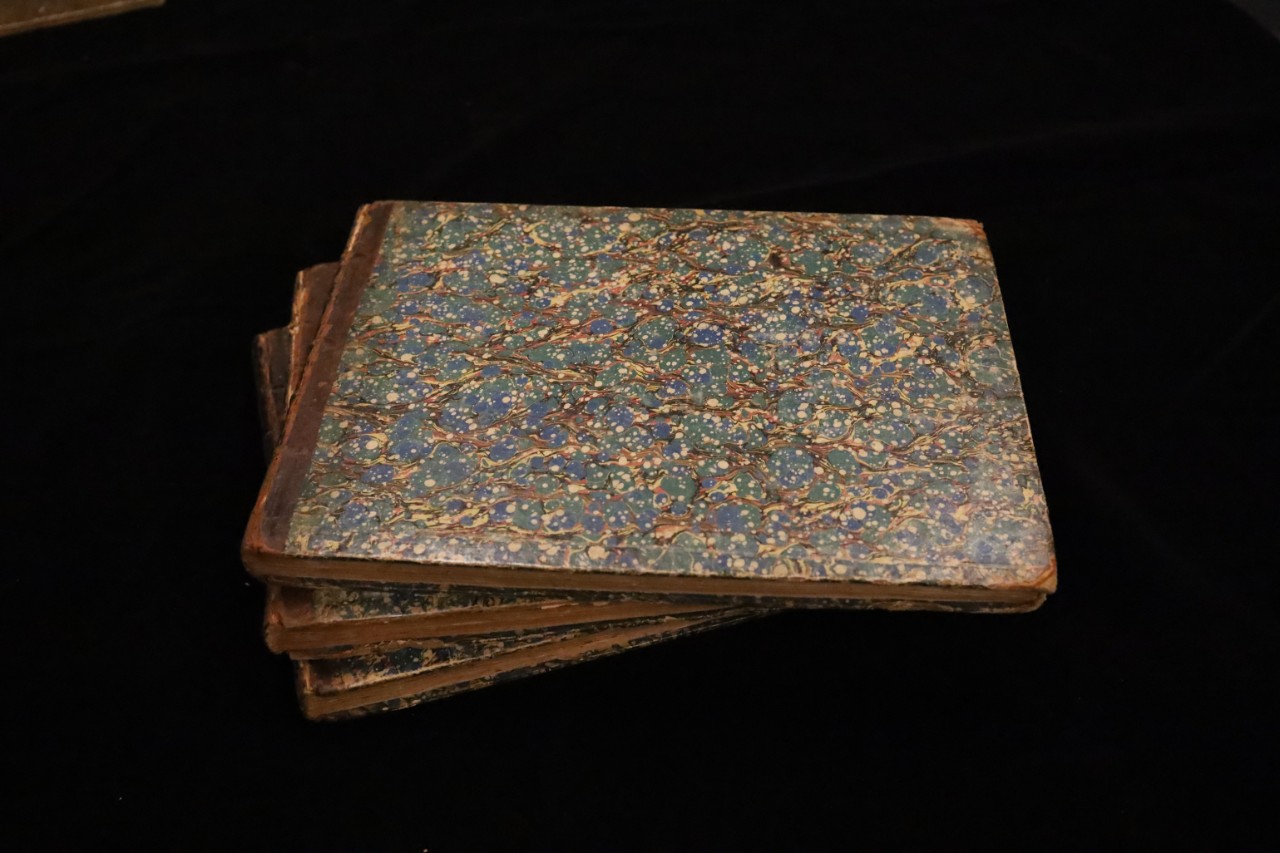
A defining strength of the collection is its remarkable concentration of early and first editions. These include eighteenth-century opera, sacred music, instrumental chamber works, and English cathedral repertory, alongside later orchestral and choral scores. Early editions of works by Michael Christian Festing, Thomas Arne, André Grétry, Joseph Haydn, Niccolò Piccinni, Gioachino Rossini, and English sacred composers such as Orlando Gibbons sit alongside nineteenth-century repertory by figures including Franz Liszt and Edvard Grieg. The range of imprints offers valuable evidence of music printing, publication networks, and repertoire circulation across Britain and continental Europe.
A love for Handel
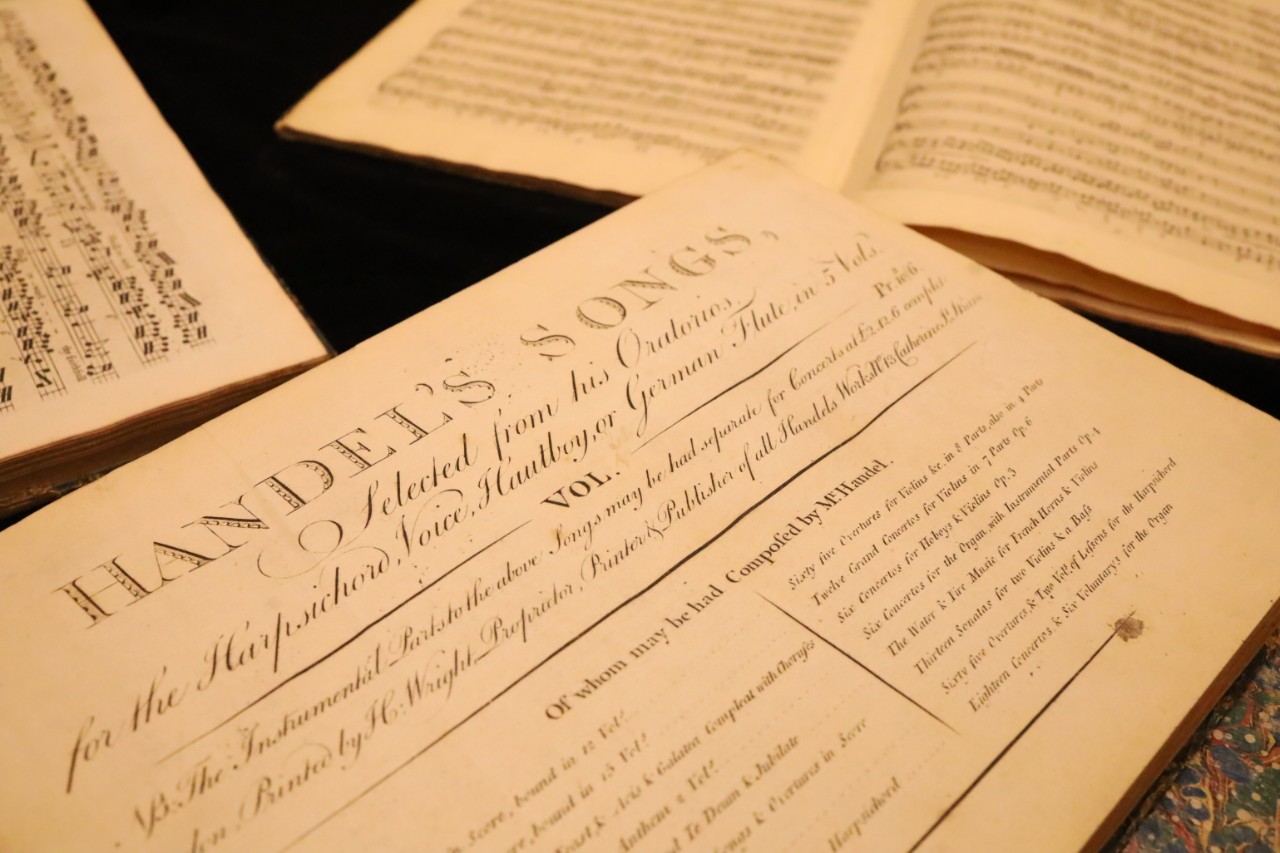
At the heart of the collection lies its exceptional Handel holdings, reflecting Dalley-Scarlett’s lifelong advocacy of Handel’s music in Australia between 1920 and 1950. He organised major Handel festivals in Brisbane and actively promoted historically significant repertoire long before it was widely revived. The most valuable item in the collection, Dalley-Scarlett P39, is a manuscript volume of Italian cantatas by George Frideric Handel, copied in the hand of John Christopher Smith (John Smith Senior), Handel’s principal copyist and close associate. This manuscript is of international scholarly importance, offering rare insight into eighteenth-century compositional workshop practice, copying procedures, and the transmission of Handel’s vocal chamber music.
The Australian musical landscape
The collection is also significant as documentation of Australian musical life in the first half of the twentieth century. Dalley-Scarlett was not only a collector but a composer, arranger, organist, choral conductor, and later a music supervisor for the ABC. His manuscripts, arrangements, annotated scores, and performance materials reveal the repertoire choices, editorial approaches, and pedagogical priorities of a central figure in Brisbane’s musical culture. The collection therefore bridges European source history with Australian reception history, showing how canonical works were studied, performed, and disseminated in a colonial and post-colonial context.



Research, study and teach with the Dalley-Scarlett Collection
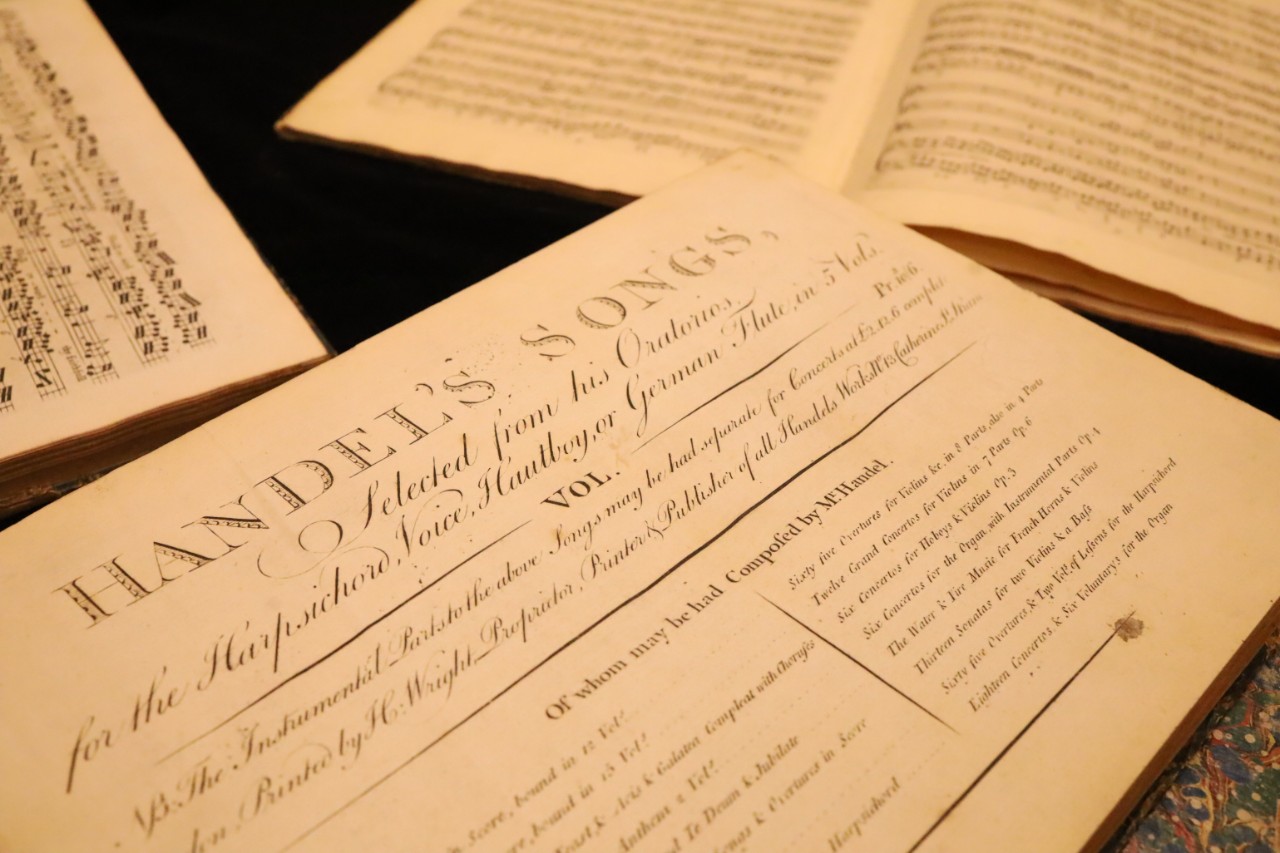
The Dalley-Scarlett Collection is valuable and important because it preserves rare primary sources alongside evidence of their later reception and use. It offers exceptional potential for research in music bibliography, edition history, performance practice, Handel studies, eighteenth-century opera, sacred music traditions, and the history of collecting. For scholars and performers alike, it provides a rich foundation for investigating how European art music travelled, was curated, and was reinterpreted within Australia’s evolving cultural landscape.
Teach with these items
The Library's extensive Rare Books and Special Collections are available to support research and education, through activities including:
- Academic-led classes
- Library-led classes / Object Based Learning (OBL)
- using digitised content
Some highlights from the Dalley-Scarlett Collection include:
- Six concerto's in seven parts: for four violins, a tenor, violoncello and a thorough bass for the harpsichord: opera nona (1756) by Michael Christian Festing. Dalley-Scarlett Q44.
- La buona figliuola: opera comica; representata al Teatro Reale, nel' Hay Market (1766) by Niccolò Piccinni. Dalley-Scarlett Q90.
- The Indian Queen (approximately 1790) by Henry Purcell. Dalley-Scarlett Q84.
- The tempest (1790?) by Henry Purcell. Dalley-Scarlett Q83.
- The creation: an oratorio (1801?) by Joseph Haydn. Dalley-Scarlett Q54.
- Eliza: an English opera, as perform'd at the Theatre Royal in Drury-Lane (approximately 1758) by Thomas Augustine Arne. Dalley-Scarlett Q6.
- Polly: an opera, being the second part of The Beggar's Opera: for the voice, harpsichord and violin (ca. 1784) by John Christopher Pepusch. Dalley-Scarlett Q45.
- A collection of anthems, and a short service in score: for 1, 2, 3, 4, 5 and 8 voices (1790) by William Boyce. Dalley-Scarlett Q31.
- The padlock: a comic opera: as it is performed at the Theatre-Royal in Drury Lane (1768) by Charles Dibdin. Dalley-Scarlett Q40.
- Acis et Galatée: pastorale heroïque (1686) by Jean-Baptiste Lully. Dalley-Scarlett Q66.
- The duenna, or, Double elopement: a comic - opera: as performed at the Theatre Royal in Covent Garden: for the voice, harpsichord, or violin (1775) by Thomas Linley. Dalley-Scarlett Q64.
- Le droit du seigneur: comédie en trois actes et en prose (1783?) by Johann Paul Aegidius Martini. Dalley-Scarlett Q69.
- Stabat Mater (1843?) by Gioacchino Rossini. Dalley-Scarlett Q98.
- The imitation of Christ: sacred cantata for four soli, chorus, strings & organ (1922) by Robert Dalley-Scarlett. Dalley-Scarlett M3.
- The butterfly that stamped (1935) by Robert Dalley-Scarlett. Dalley-Scarlett M34.
- Handel's cantatas (1747-1749) by George Frideric Handel, in the hand of John Christopher Smith. Dalley-Scarlett P39.
- Otho: an Opera as it was Perform'd at the Kings Theatre for the Royal Accademy (1740) by George Frideric Handel. Dalley-Scarlett P46.
Access these items
Rare Books and Special Collections (RBSC) can be accessed by staff, students and academics (using existing University credentials), as well as the general public (by registering for a free RBSC community membership).
The items in this collection can be located in the Library catalogue. Make a request to view an item, under "more options" (at least 2 business days in advance). Then visit the Rare Books and Special Collections Reading Room during opening hours to view.

Contact
Please email enquiries to cultural.collections@usyd.libanswers.com