Donovan’s Insects

Edward Donovan (1768–1837) was an Anglo-Irish illustrator and writer who devoted his life to the study of plants and animals. Born in Cork, he moved to London as a young man and rarely travelled beyond Britain, yet his works explored species from across the globe. Donovan was an amateur zoologist, meaning he was not formally trained but contributed significantly to scientific knowledge. He collected specimens through auctions and private collections, including those from voyages led by James Cook and Sir Joseph Banks. In 1807, he opened the London Museum and Institute of Natural History, showcasing his growing collection. His passion for natural history was costly; extravagant spending and poor financial planning led to bankruptcy. The museum closed in 1817, and Donovan died in poverty two decades later. Despite these hardships, his publications remain landmarks in early entomology — the study of insects.
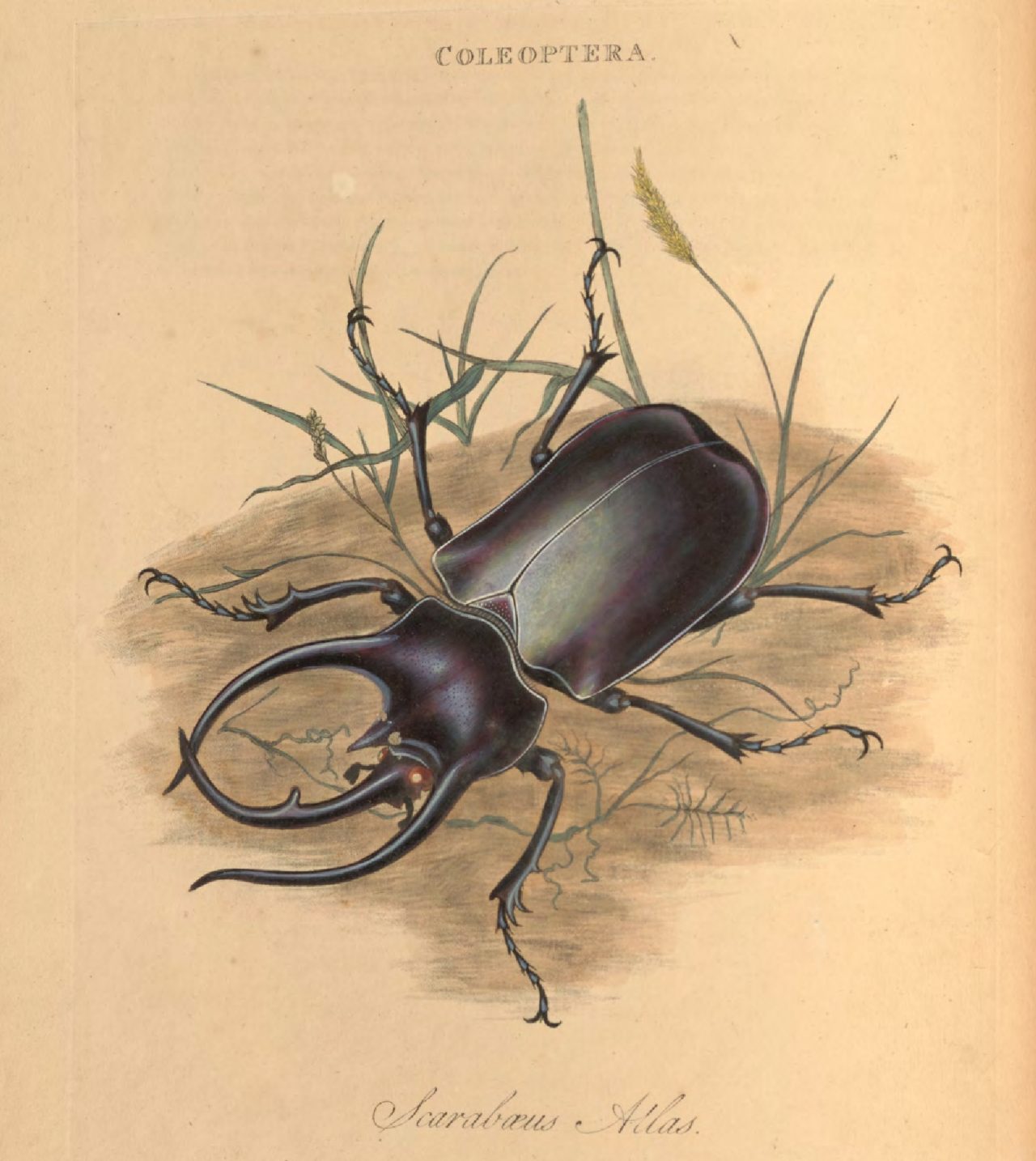

Donovan’s most famous works form a trilogy known as the Epitome series, published by subscription and printed by T. Bensley. These books were sold through leading London booksellers such as Rivington and Symonds.
The first volume, An Epitome of the Natural History of the Insects of China (1798), illustrated over 100 species, many based on specimens linked to George Macartney’s embassy to China. RB 4698.86 or view a digitised copy.
The second, An Epitome of the Natural History of the Insects of India and the Islands in the Indian Seas (1800), described about 250 species and was the first European entomology book devoted to India. RB 4700.110 or view a digitised copy.
The third, An Epitome of the Natural History of the Insects of New Holland, New Zealand, New Guinea, Otaheite, and other islands in the Indian, Southern, and Pacific Oceans (1805), focused on Australasia and the Pacific. It includes 153 species, many of which had not been illustrated at the time. It is considered the first systematic publication on Australian insects and was dedicated to Sir Joseph Banks. Ferguson 408 or view a digitised copy.


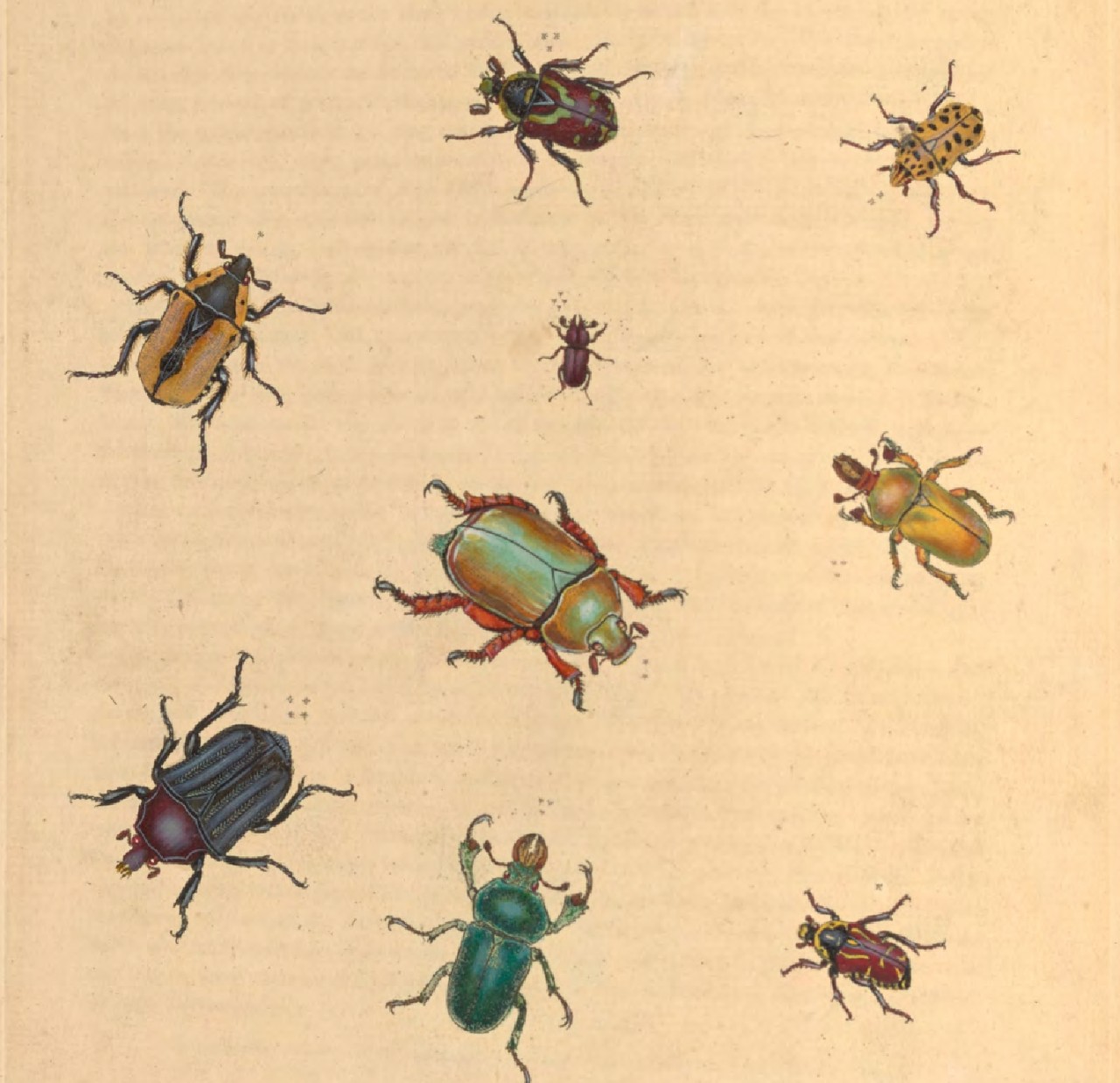
Donovan classified species using Linnaean taxonomy, a system that groups organisms by shared characteristics, and referenced the work of entomologist Johan Fabricius. His research relied on artefacts from private collections and his own museum instead of fieldwork and his illustrations were celebrated for their beauty and precision. He engraved the plates himself and applied colour by hand, sometimes with assistance. The colouring process used thick paints, glossy highlights, albumen overglazes, and even metallic pigments. These techniques gave the images a rich, almost painterly quality, often obscuring the fine engraved lines beneath. Embellishments like these were more lavish than was typical for scientific works, which typically favoured clarity over decoration. Donovan’s approach was both scientific and artistic, appealing to collectors as well as naturalists. These works offer a glimpse into the intersection of art and science in the Georgian era.


Access these items
Rare Books and Special Collections (RBSC) can be accessed by staff, students and academics (using existing University credentials), as well as the general public (by registering for a free RBSC community membership).
These items can be located in the Library catalogue. Make a request to view an item, under "more options" (at least 2 business days in advance). Then visit the Rare Books and Special Collections Reading Room during opening hours to view.
This item has also been fully digitised. View and download scans through the Digital Collections website: Donovan's Insects.
Teach with this item
The Library's extensive Rare Books and Special Collections are available to support research and education, through activities including:
- Academic-led classes
- Library-led classes / Object Based Learning (OBL)
- using digitised content
Related information
View and download scans of items in this collection
Contact
Please email enquiries to cultural.collections@usyd.libanswers.com