金銭支出帳 Kinsen shishutsuchō

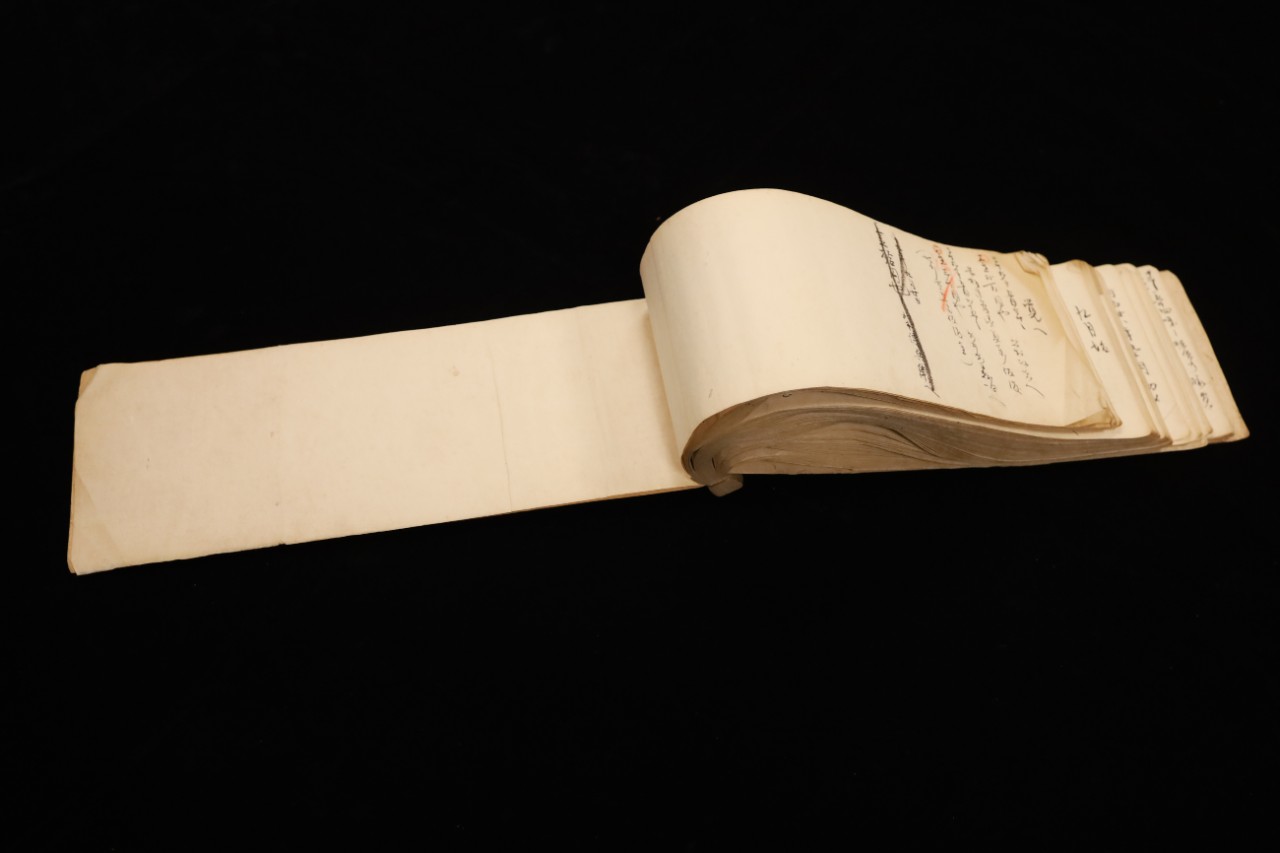
Sometimes, the most intriguing and compelling historical objects are the most mundane. They do not demand attention through their rarity or unattainability, but rather, because they remind us that the lives of people hundreds of years ago were just as rich and complex as our own. The University of Sydney’s Rare Books and Special Collections houses just such an object: a handwritten accounting ledger from early 20th century Japan: 金銭支出帳 Kinsen shishutsuchō (EA 4555 3). Dating to Japan’s Meiji era (1868-1912), it represents a period when the country was charging headlong toward modernity after two centuries of virtual seclusion. The ledger records the everyday expenses of a family living in a major city. It sheds light on the food culture, material needs, and socio-economic conditions that defined life in early twentieth century Japan, a time of profound social and political change.
Tracing daily life and cultural shifts through a Meiji ledger
This type of document is referred to as a 大福帳 (daifukuchō), a type of ledger commonly used in Edo (1601-1868) and Meiji periods. The cover is marked in strong, deliberate brushstrokes with the title "金銭支出帳", which in English translates to “Record of Expenditures”.
Measuring 335 mm by 120 mm and 24 mm thick, the book feels substantial, made of mulberry fibre washi paper that remains remarkably intact. On the cover, there are two deep creases that hint at its regular use. The one near the mouth of the pad suggests a diligent hand bending it so as to easily find certain pages. The second crease which is near the binding at the spine, likely formed as the thick pages were pressed down into a workable flat surface.
The ledger cover is also inscribed with the date: "37th year of Meiji, first month". According to the Japanese imperial calendar, the Meiji Era began in 1868, which is counted as the first year. The 37th year would be 1904. Japan follows a lunar calendar, so the “first month” does not necessarily correspond with January. This ledger was used for longer than initially intended, as the user has written the Japanese characters “eight” and “nine” beside the “seven” of the “37th year”. So the ledger was used for 3 years, until year 1906.
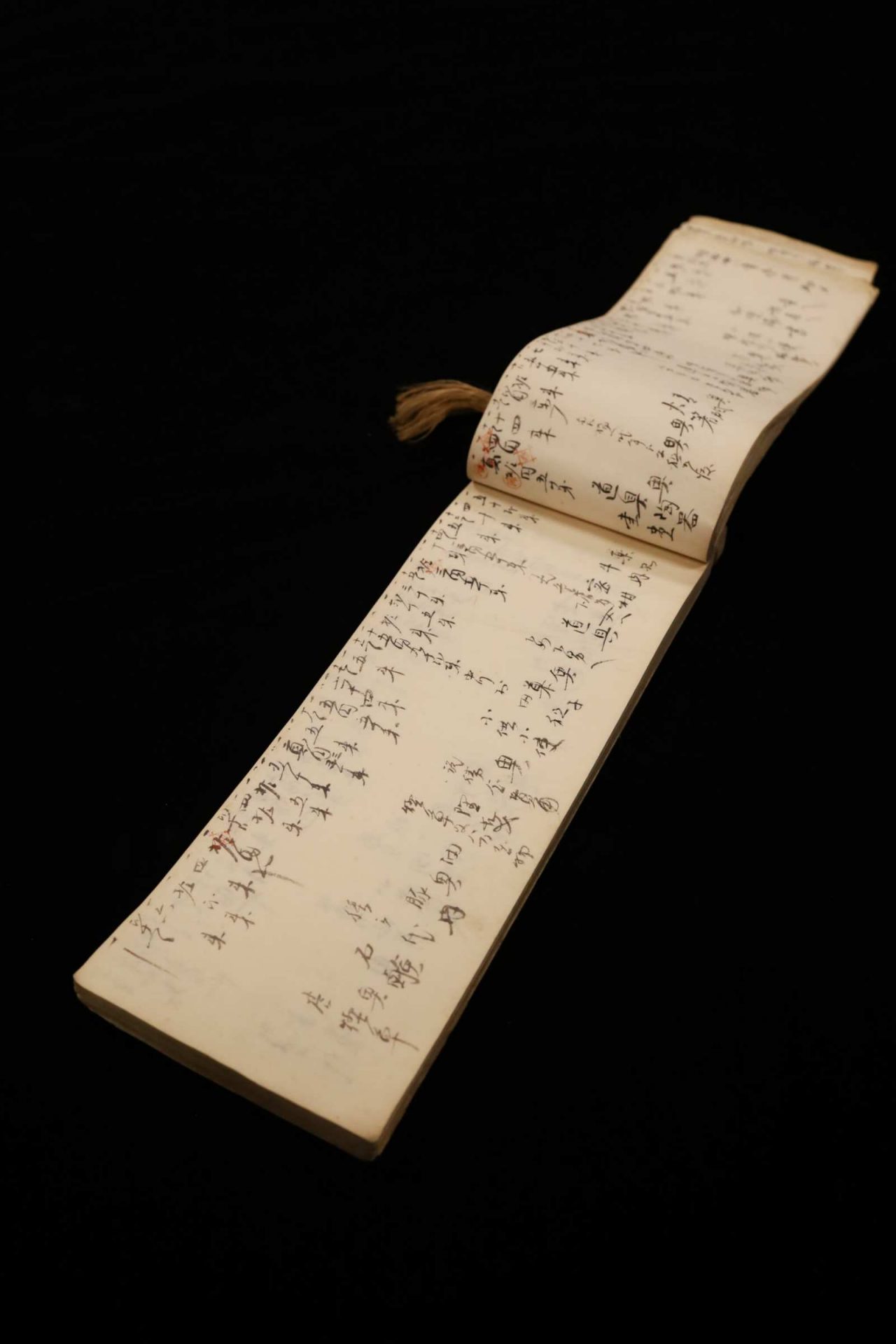
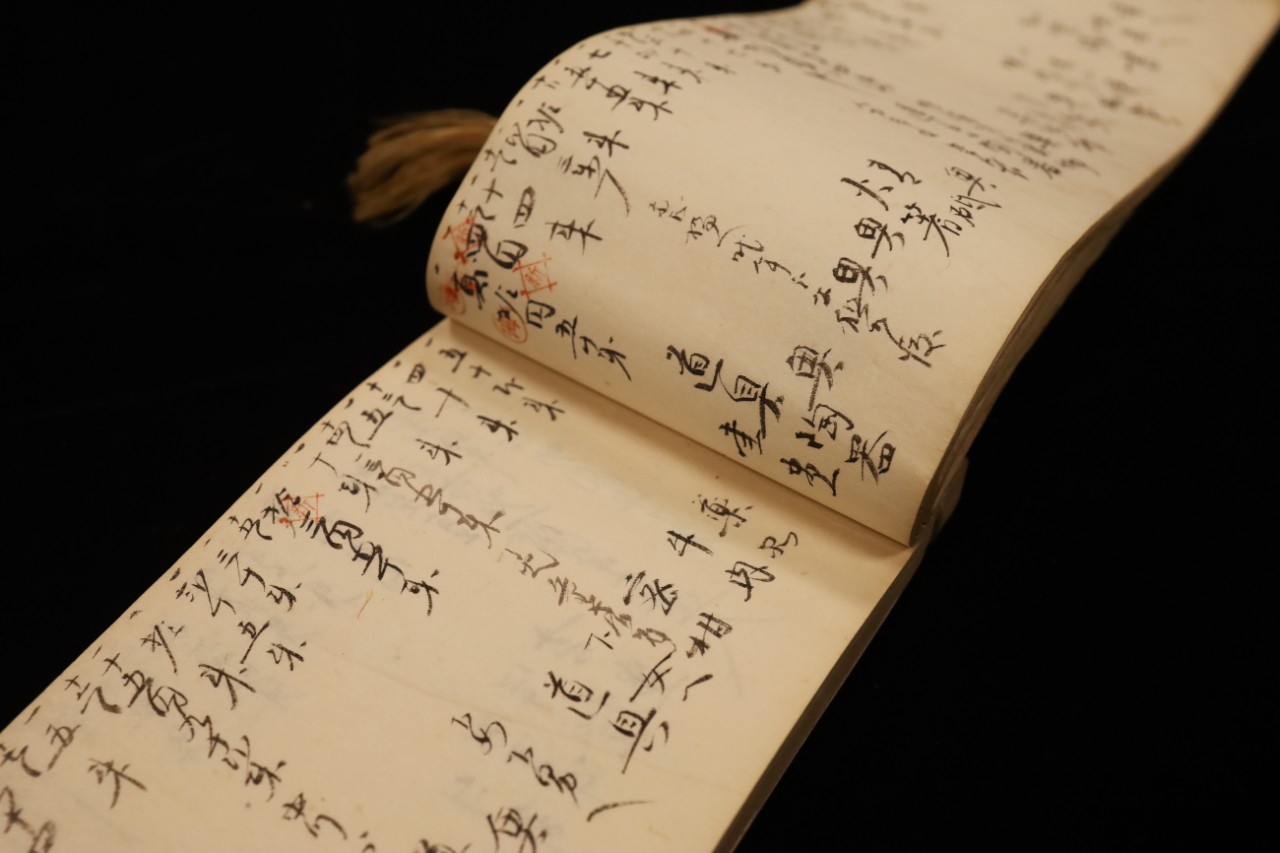
When opened, the recorded transactions can be read from right to left, top to bottom. Perusing the transactions paints the picture of a family who ate fish, wore socks, smoked tobacco, drank sake and visited the hairdressers. Records also show donations being made, confirming that this family followed the widespread custom of visiting temples on New Year's Day.
This ledger bears witness to the profound socio-cultural shifts of the era, such as the documentation of steam train journeys. The steam train (kisha) was first officially implemented as a form of transportation in the 1870s when British civil engineer Edmund Morel oversaw its construction in Yokohama. The presence of these expenses in the ledger reflects the rapid modernisation and industrialisation that took place after centuries of isolationist policies (sakoku) that strictly limited interactions with the outside world throughout the preceding Edo period. The blending of traditional accounting methods with modern expenditures reflects the cultural juxtaposition of the time.
Bound for its Purpose
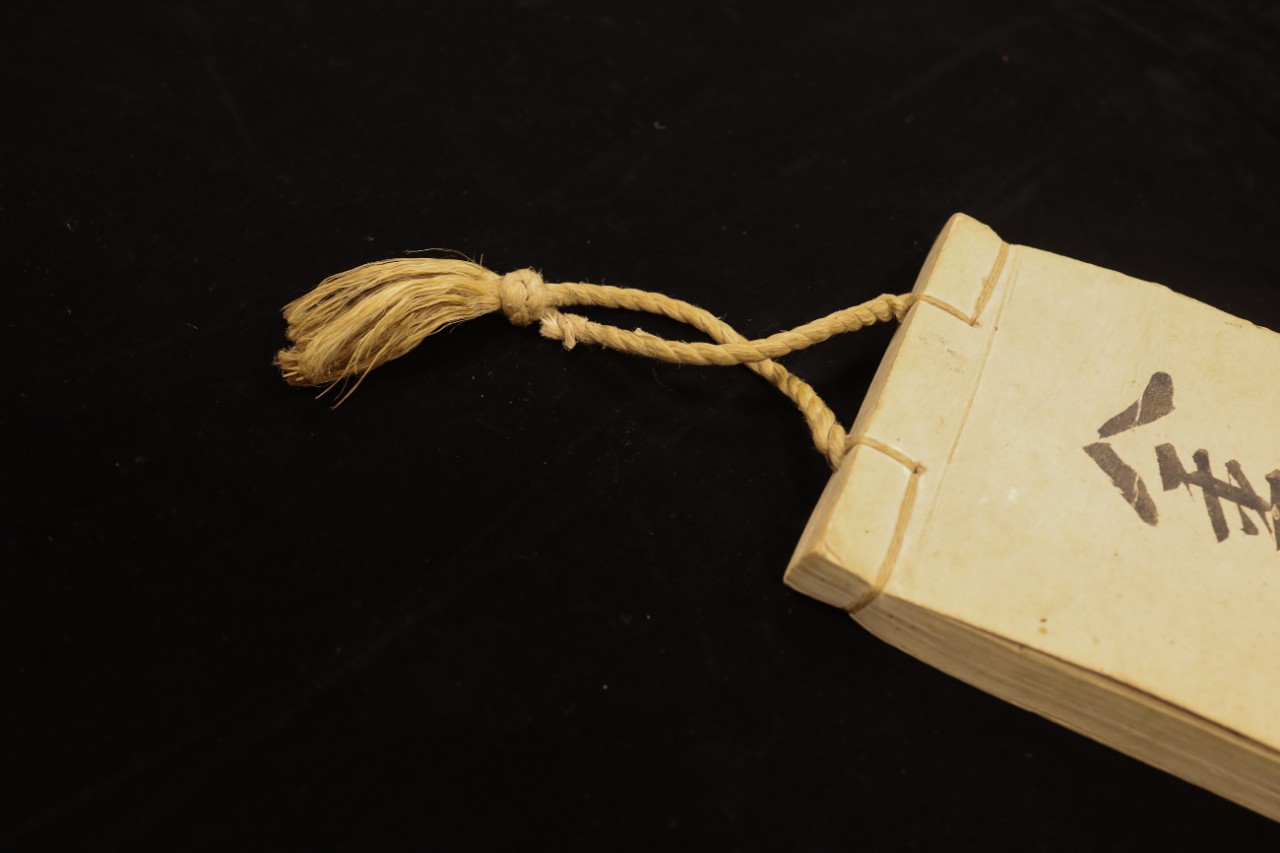
The ledger’s binding reflects its role as a functional item. Folded sheets of washi paper were stacked and stitched with string through twin top holes, then finished with a braided hemp tassel - both practical and decorative. Its sturdy construction hints at its role as a well-used household tool. As the paper is folded in quadrants, each leaf can be opened gently to reveal two layers of paper. Ledgers like these were so valued that, in times of fire, families were known to toss them into wells for safekeeping, trusting in the water-resistance of washi paper.

Life then, life now
Among the entries in the ledger, two stand out for their charming mundanity. One is a series of repeated expenses termed “子守小使” (kodomo kozukai), which today would more likely be written as 子供小遣い, meaning pocket money for the children. This small detail reveals the presence of children in the household, linking us to the timeless practice of instilling financial responsibility. The second is a page of rough notes at the very back of the ledger titled: ”覚へ” (oboe), meaning “to remember”. This to-do list is a gentle reminder that some aspects of life — like keeping track of tasks — will never go out of fashion.
Call number: EA 4555 3
Written by Anqi Teng, Bachelor of Arts student (English and Japanese), as part of JPNS3002: Classical Japanese.
Access this item
Rare Books and Special Collections (RBSC) can be accessed by staff, students and academics (using existing University credentials), as well as the general public (by registering for a free RBSC community membership).
This item can be located in the Library catalogue. Make a request to view an item, under "more options" (at least 2 business days in advance). Then visit the Rare Books and Special Collections Reading Room during opening hours to view.
Teach with this item
The Library's extensive Rare Books and Special Collections are available to support research and education, through activities including:
- Academic-led classes
- Library-led classes / Object Based Learning (OBL)
- using digitised content
Related information
Contact
Please email enquiries to cultural.collections@usyd.libanswers.com