Annotated first edition of Isaac Newton's Principia
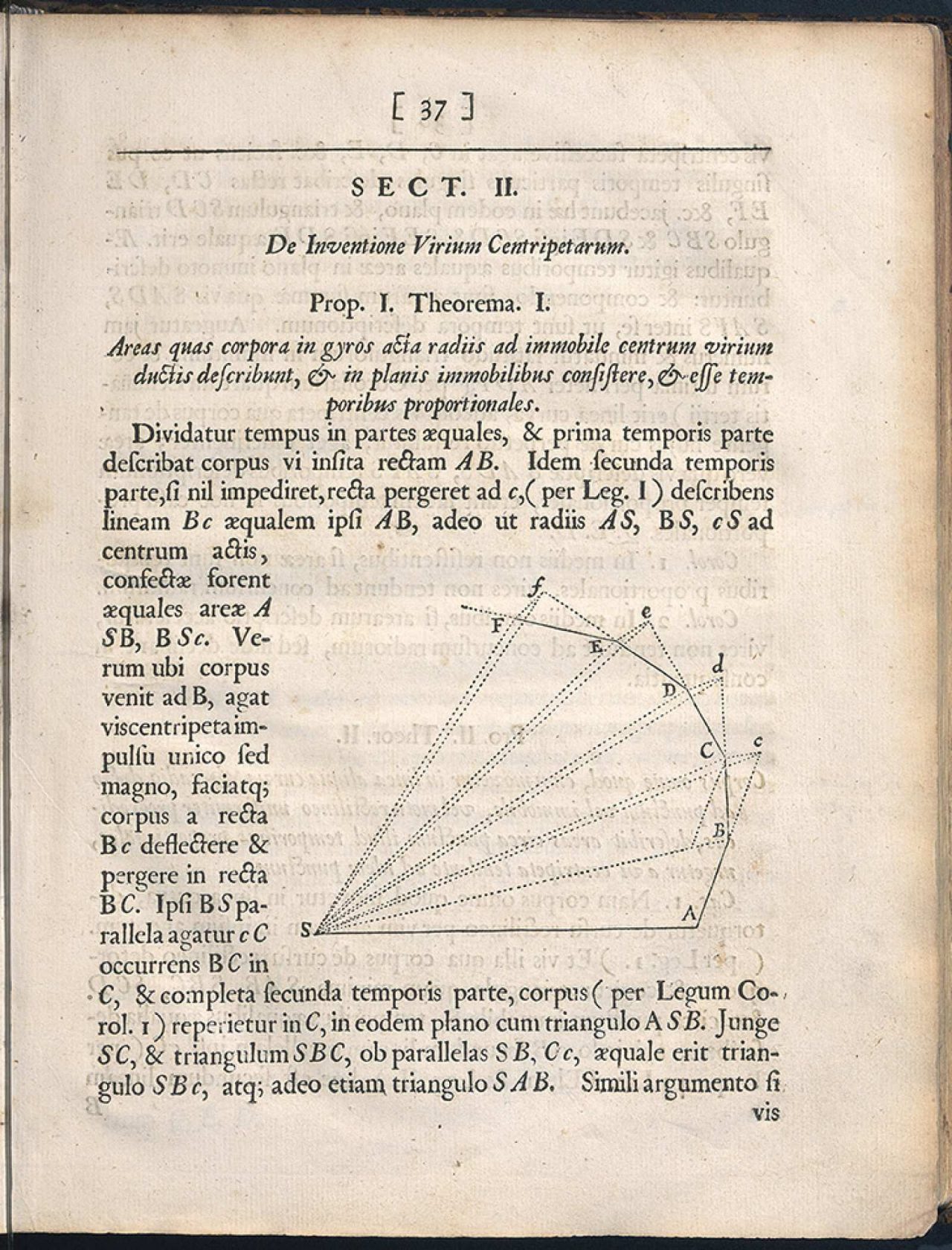
With the publication of the Philosophiae Naturalis Principia Mathematica in 1687, Isaac Newton (1643-1727) established the modern science of dynamics by formulating his three laws of motion. He described how elliptical orbits work and how bodies in motion exert force upon one another. It's considered one of the most important works in the history of science.
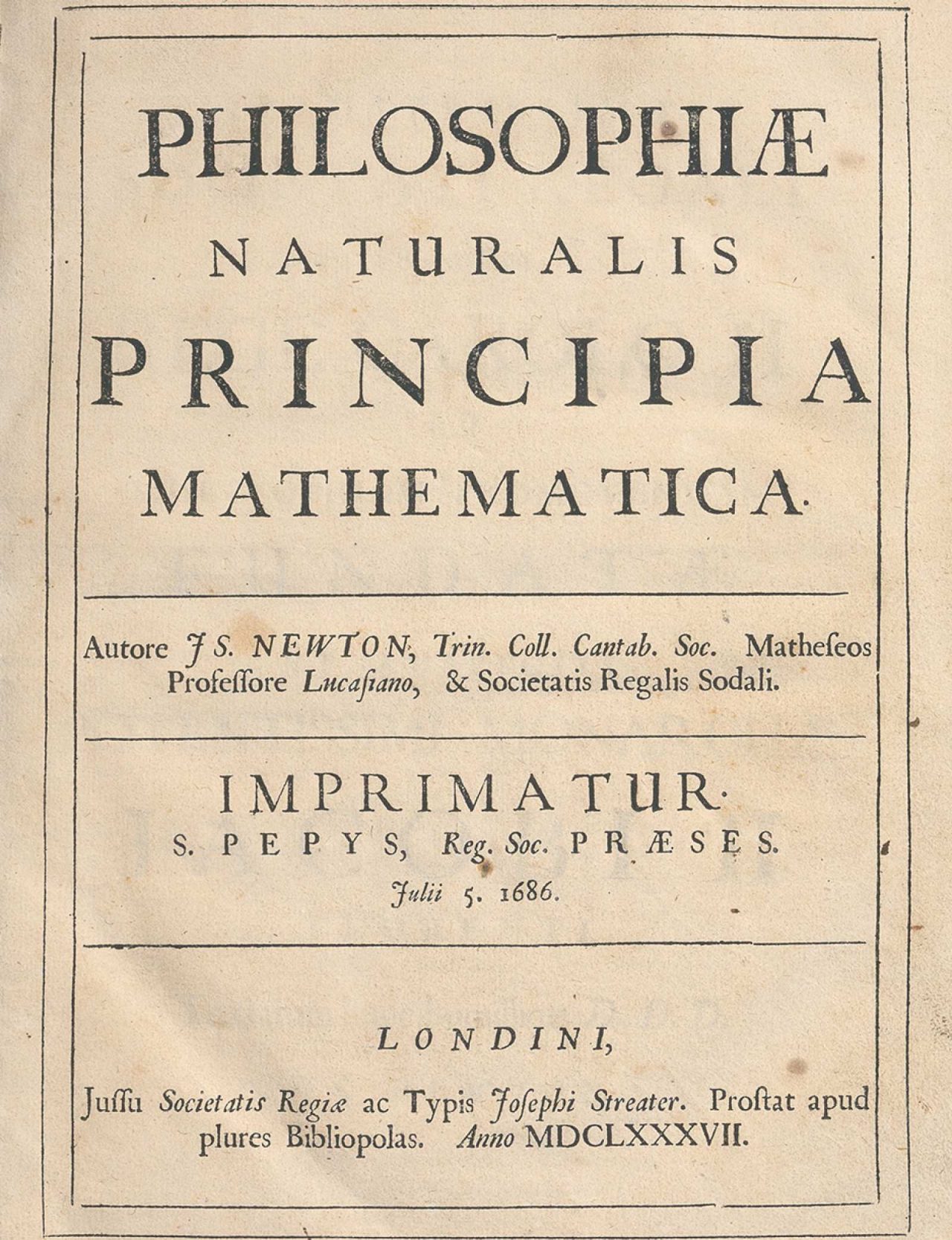
The Principia was published under the aegis of the Royal Society but almost didn’t make it to print. Samual Peyps, its president, endorsed it in 1686 but the Society had just spent its book budget on De Historia Piskium (Macdonald Wing W2877). Edmund Halley (of Halley's comet) served as a clerk of the society and supported Newton's work so strongly that he personally financed the publication of Principia. He wrote an Ode to Isaac Newton which is included in the first edition of Principia.
Ironically, De Historia Piskium was unpopular and sold poorly, causing severe strain on the finances of the society. The Library holds a copy of Historica Pisikum, which has been digitised and can be viewed online.
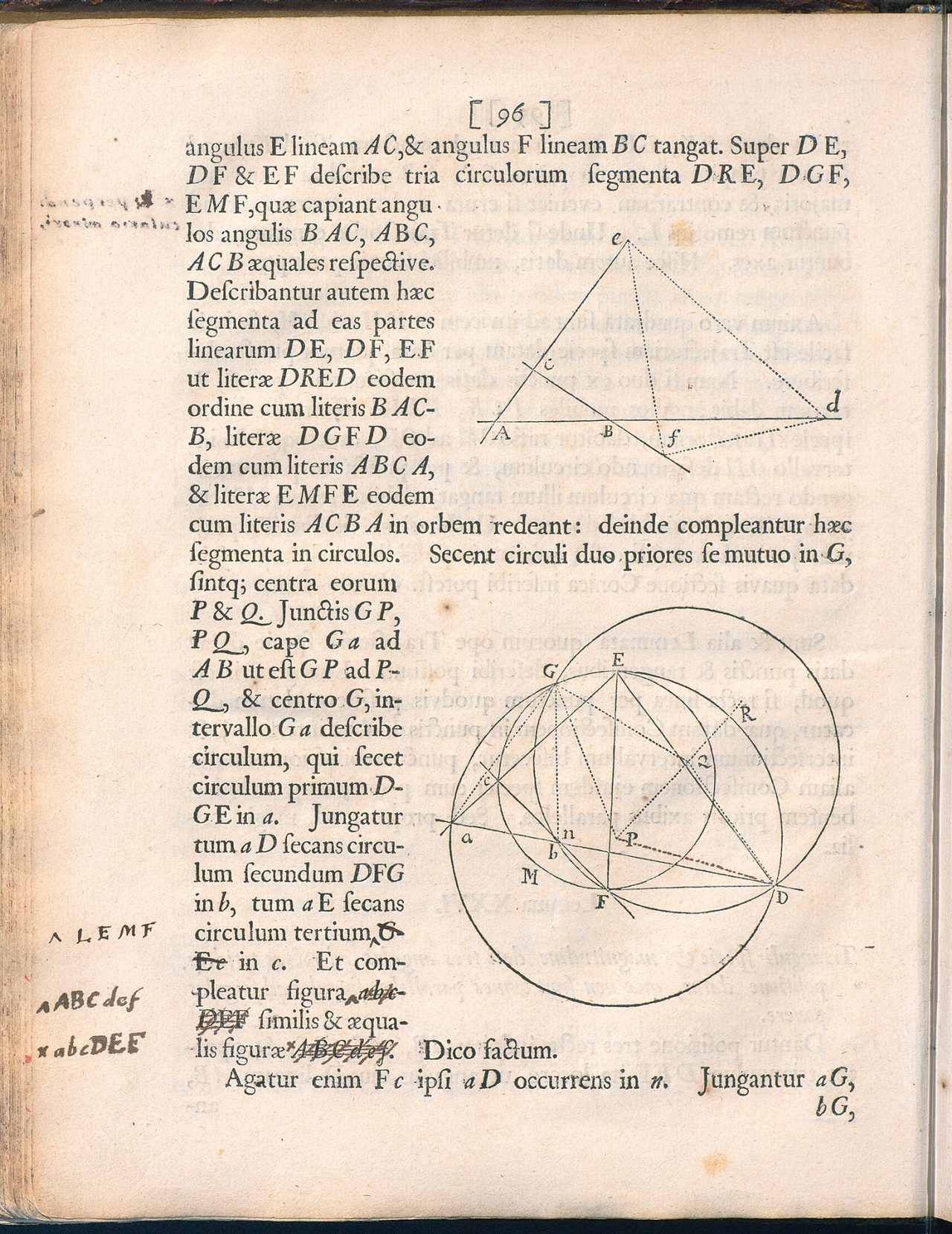
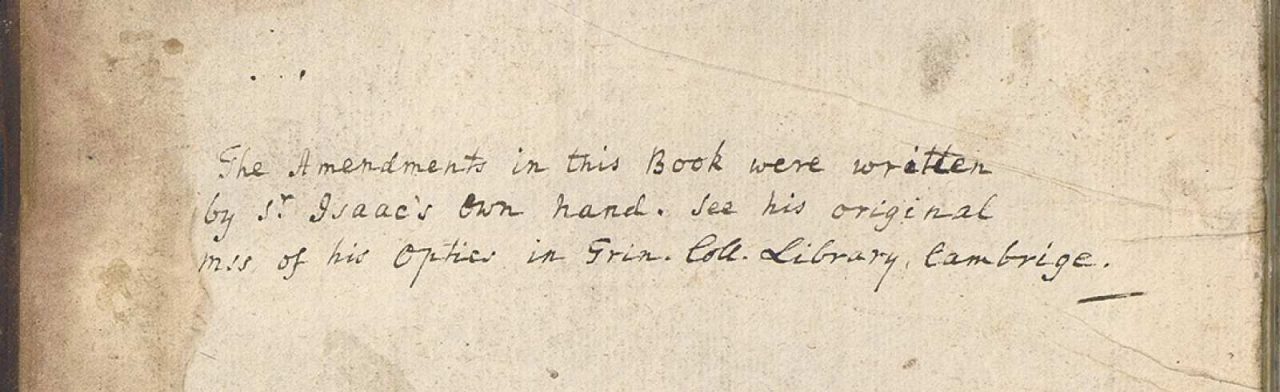
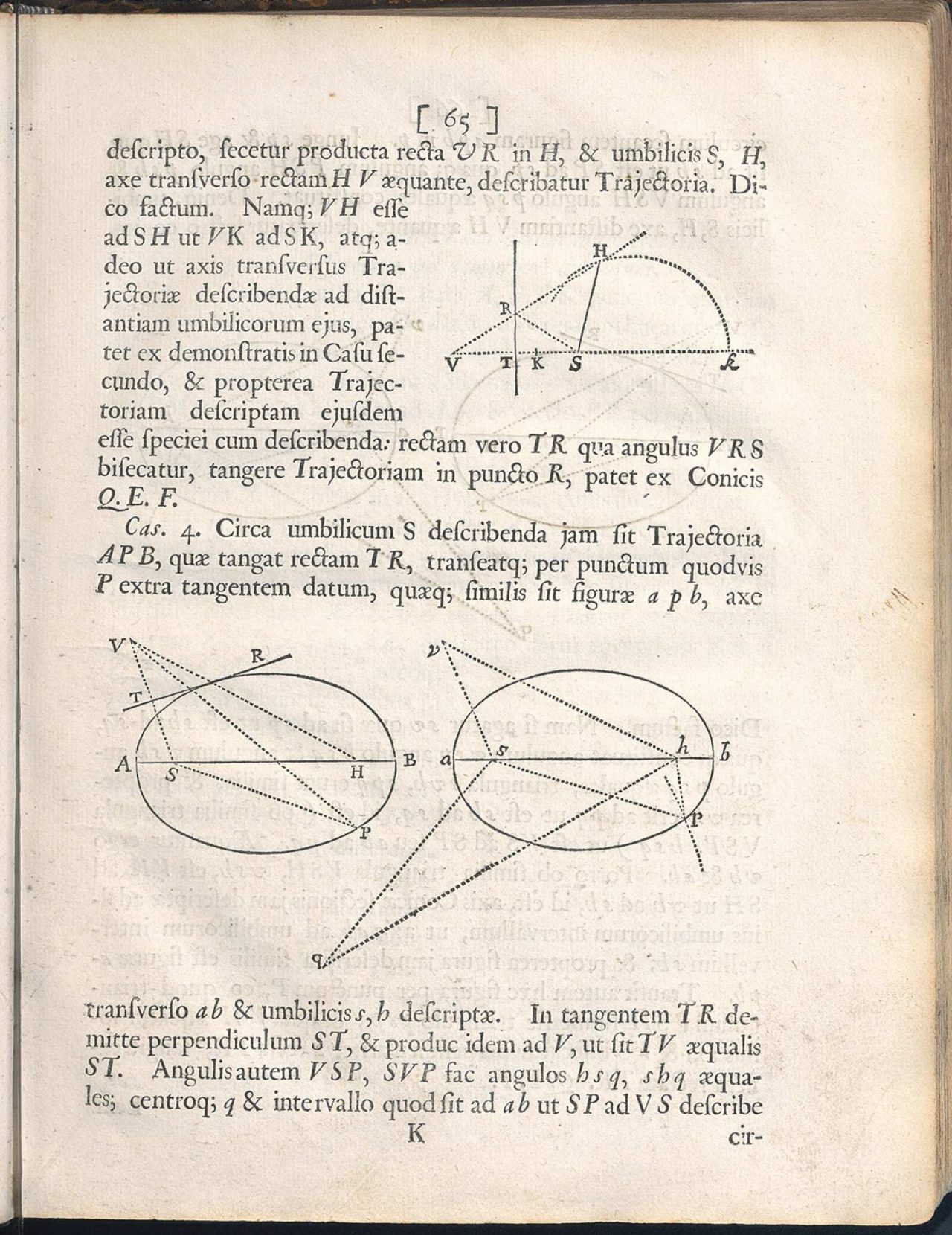
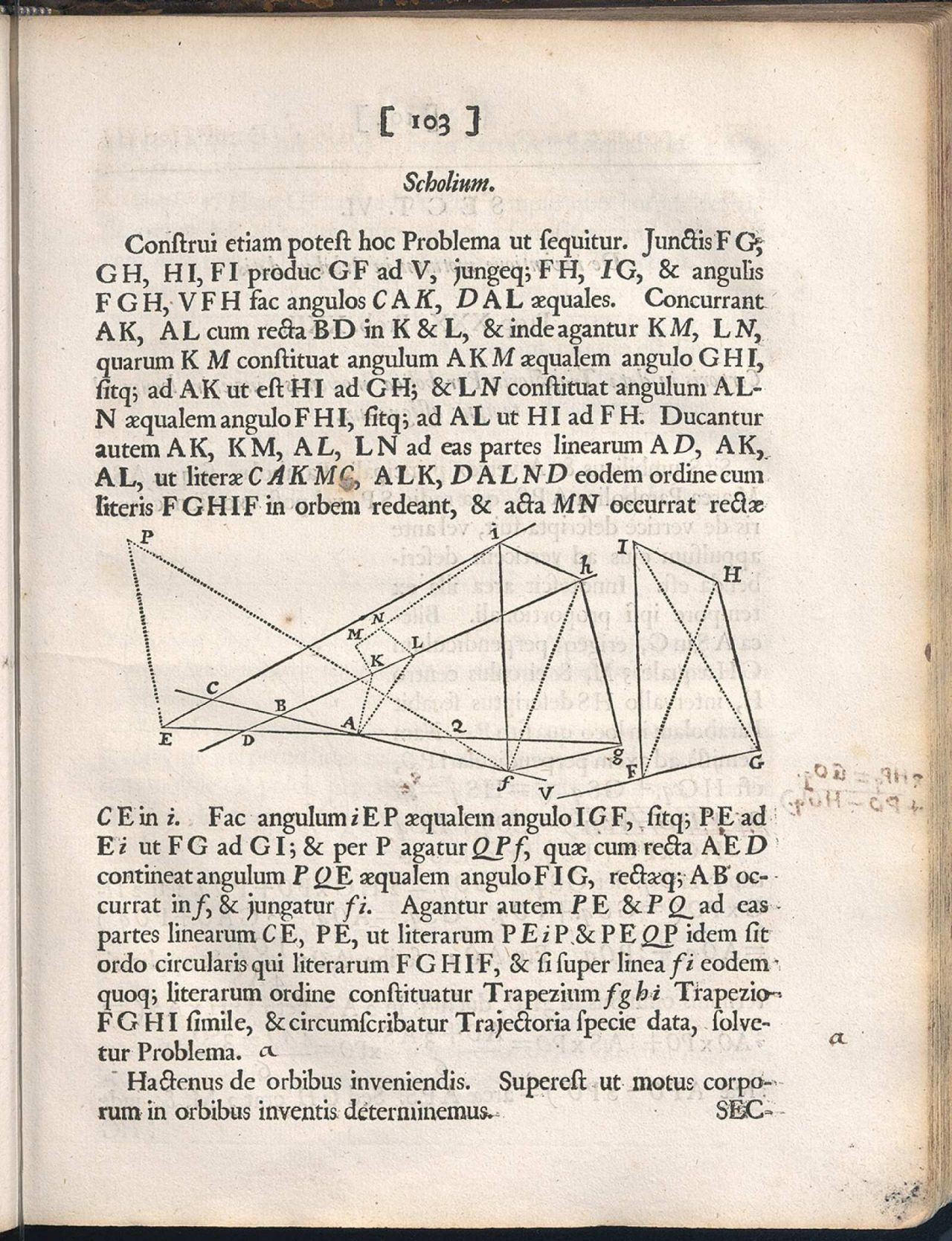
The Library's copy of Principia is one of only four known copies that were sent by Newton and his assistant Roger Cotes to other mathematicians to eliminate any errors in a second edition. Five pages of manuscript notes on the front flyleaves were written by John Craig, a Scottish mathematician. Newton and Cotes made other marginal annotations, and occasional alterations to the diagrams. These annotations show Newton's peer-review process and how his ideas were received by his contemporaries. The second edition (1713) includes some (though not all) of the corrections made in the Library's first edition.
Our copy of Principia was lost for more than 140 years, after being stored in an old clock tower owned by the James family of Ightham Court, in Kent. The Hon. Arthur Bruce Smith, a member of Parliament, barrister-at-law, and King's Counsel, rediscovered it in 1908 when he was asked to look through a list of books which had recently arrived in Australia. Bruce Smith, who incidentally assisted in drafting the Australian Federal Constitution, purchased a number of the books, including the Principia. He wrote two letters to the journal Nature in 1908 regarding his purchase and discovery of the annotations and their significance.
The digital collection features the digitised edition of Principia and the letters about its 1908 rediscovery by Arthur Bruce Smith KC, and its donation to the University of Sydney by his children in 1961.
Call number: Wing N1048
The Library holds several letters and clippings related to Principia, including:
- Letter to Mervyn Millett about calligraphic research into Principia (1973) by Keith Edward Bullen. View a digitised copy.
- Letter to the Editor of Nature discussing the identification of annotations in this copy of Principia (1908) by J. Bosscha. View a digitised copy.
- Letter to Barbara Bruce Smith in thanks for photostat films for Principia (1950) by G. Findlay Shirras. View a digitised copy.
- Letter to Arthur Bruce Smith regarding the valuation of this copy of Principia (1931) by Henry Sotheran Ltd (booksellers). View a digitised copy.
- Letter to Barbara Bruce Smith regarding the copies from Principia made for George Findlay Shirras (1950) by Sir. Douglas Berry Copland. View a digitised copy.
- Letter to Barbara Bruce Smith regarding correspondence from Mr Brasch around Principia (1943) by H. J. Carslaw. View a digitised copy.
- Letter to Dr. Andrew Delbridge Osborn regarding the donation of Principia to the Library (1961) by Robert Blomfield. View a digitised copy.
- Letter to Dr. Andrew Delbridge Osborn regarding the donation of Principia to the Library (1961) by Barbara Bruce Smith. View a digitised copy.
- Letter to Professor Stephen Roberts regarding the gift of Principia with annotations from David Wood (1961) by Barbara Bruce Smith. View a digitised copy.
- Letter to Frederick H. Brasch, Chief of the Smithsonian, regarding the request for copies of pages from Principia for his research (1943) by Verton Bruce Smith. View a digitised copy.
- Letter to Barbara Bruce Smith after an enquiry from the Curator of the Babson Institute Library (1952) by R. G. Donald. View a digitised copy.
- Letter to Arthur Bruce Smith identifying the handwriting of Dr. Roger Coats in this copy of Principia (1908) by Walter Grey (Trinity College). View a digitised copy.
- "Gift to the University of Newton's Principia" (1962) by Keith Edward Bullen. View a digitised copy.
- "The University copy of Newton's Principia" (1973) by Keith Edward Bullen. View a digitised copy.
- "Newton's 'Principia' and its influence" (1962) by Keith Edward Bullen. View a digitised copy.
- Letter published in Nature (April 1908) by Arthur Bruce Smith. View a digitised copy.
- Letter published in Nature (December 1908) by Arthur Bruce Smith. View a digitised copy.
- "Newton's Library" (1928) by Arthur Bruce Smith. View a digitised copy.
- Letter to Barbara Bruce Smith requesting copies of pages from Principia for his research (1943) by Frederick E Brasch (Chief of the Smithsonian scientific collection). View a digitised copy.
- Letter to Verton Bruce Smith discussing the value of annotated copies of Principia (1943) by Frederick E. Brasch. View a digitised copy.
- Letter to Arthur Bruce Smith providing advice on the potential sale of this copy of the Proncipia (1924) by R. F. Sharp. View a digitised copy.
- Letter to Miss E. Bruce Smith thanking the sisters for the gift of Principia (1961) by Sir Stephen Roberts. View a digitised copy.
- "Rare first edition for Sydney University …" (1961) by unknown. View a digitised copy.
- "£3,750 Volume" (1961) by unknown. View a digitised copy.
- "Newton's "Principia.": a discovery by Mr Bruce Smith" (1908) by unknown. View a digitised copy.
- "How a first edition of Principia with Isaac Newton's notes got to Sydney" (2020) by Katie Booth. View a digitised copy.
Access these items
Rare Books and Special Collections (RBSC) can be accessed by staff, students and academics (using existing University credentials), as well as the general public (by registering for a free RBSC community membership).
This item can be located in the Library catalogue. Make a request to view an item, under "more options" (at least 2 business days in advance). Then visit the Rare Books and Special Collections Reading Room during opening hours to view.
This item is part of a digital collection which also contains related items. View and download scans through the Digital Collections website: Annotated first edition copy of Newton's Principia.
Teach with this item
The Library's extensive Rare Books and Special Collections are available to support research and education, through activities including:
Academic-led classes
Library-led classes / Object Based Learning (OBL)
using digitised content
Contact
Please email enquiries to cultural.collections@usyd.libanswers.com